Steam Rising at Awara Onsen
Also written: あわら温泉の湯けむり · 芦原温泉的汤烟 · 蘆原溫泉的湯煙
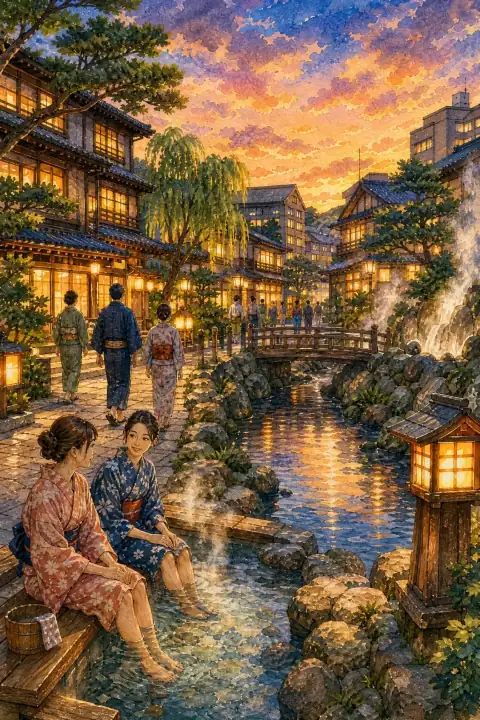
A hot-spring town known as a retreat for the Kansai region, where you can experience traditional Japanese relaxation through footbaths and stays at ryokan.
An Illustrated Japan

Mizuky Workshop / An Illustrated Japan / Fukui / Life & Daily / Steam Rising at Awara Onsen
Also written: あわら温泉の湯けむり · 芦原温泉的汤烟 · 蘆原溫泉的湯煙
A hot-spring town known as a retreat for the Kansai region, where you can experience traditional Japanese relaxation through footbaths and stays at ryokan.
An Illustrated Japan
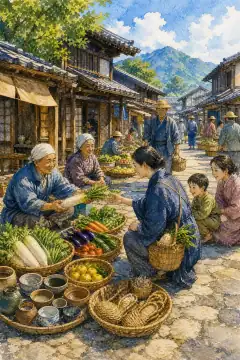
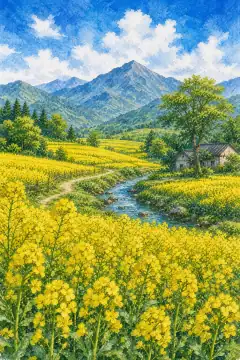
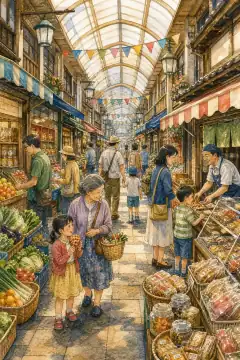
Steam Rising at Awara Onsen, located in Fukui, offers a layered example of life & daily in central Japan. Approaching it, you sense how topography, wind and light have guided how people build and move. Documentary records and cadastral maps show the area marked as early as the 1880s to 1930s, with formal reassessment as a local resource occurring in the mid-20th century. The current name appears in village land registers and in a 1970s survey of old manuscripts that include earlier variants. Thatch, tile and stonework traditions are noted in repair logs: flood damage in the late 19th century, followed by community-led reconstruction, appears in several spots. Small shrines, storehouses and field shelters nearby preserve ownership stamps and votive inscriptions that let historians trace family lineages and land transfers. Topographically, the setting reads in three layers. Foreground details such as stone paving, hedging or a small embankment guide the eye inward, while mid-distance houses, fields or groves show how livelihood is organized. Distant ridges or sea lines provide a stable frame that shifts with weather. Morning light emphasizes texture and lingering mist, midday clarifies color, late afternoon deepens shadow and winter snow reduces the scene to essential lines. Wind, fog, seasonal blossom and snowfall are not interruptions but compositional partners, which is why photographers return repeatedly. Community stewardship is visible in low-key maintenance. Volunteer groups refresh signboards, trim paths and organize clean-ups, often explaining seasonal highlights and requests to avoid private land or sensitive flora. Old photographs preserved in the local archive show how land use, vegetation and building density shifted across decades, from post-station bustle with horse carriages to quieter residential use. Former common lands reorganized during Meiji land reforms became municipal forests that still yield timber for small workshops. Craft traditions such as woodworking and lacquerware persist; younger artisans arrived during the 2000s and open weekend studios for hands-on learning. For visitors, unhurried attention pays off. Check seasonal guidance at the information point, note any temporary closures after heavy rain or snow, and keep to marked paths to respect private fields and fragile plants. Dawn is good for soft layering and birdsong, midday for clear mapping of settlement patterns, dusk for silhouette and silhouette of ridges. Bring flexibility: fog may close one view and open another of closer textures. Old postcards in the local archive offer comparison points that turn a walk into dialogue with memory. Move slowly, carry out what you carry in, and leave time to notice how water, wind and community labor keep the site coherent.