Mizuky Workshop / An Illustrated Japan / Kansai / Osaka
Osaka
40 illustrations · 大阪府
Osaka Prefecture is the economic, commercial and transportation core of western Japan, with Osaka City as its capital. Despite being the second smallest prefecture at about 1,905 square kilometers after Kagawa, it has the third largest population with about 8.76 million residents and the second highest population density in Japan. Historically called Naniwa, where Naniwa-kyo palace once stood, it developed as a merchant city and city of water surrounded by rivers and canals. Today it is famous for its vibrant street food culture, including takoyaki and okonomiyaki, as well as neon districts like Dotonbori, modern landmarks and a highly urbanized bay area.
An Illustrated Japan

Famous Views
The sights a prefecture is known for — the ones on the postcards, and a few that should be.
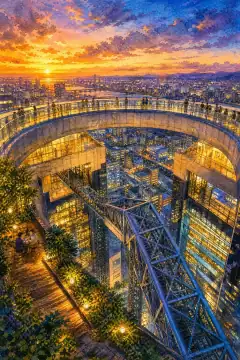
Umeda Sky Building - Floating Garden Observatory
梅田スカイビル 空中庭園展望台
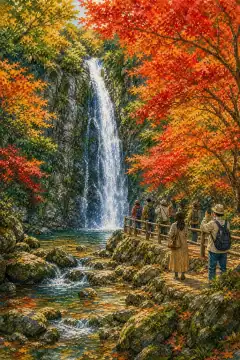
Minoo Falls
箕面大滝
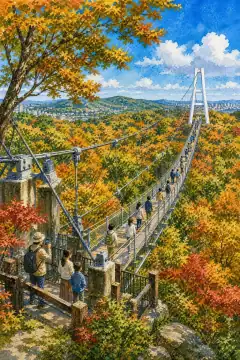
Hoshida Park - Star Swing
ほしだ園地 星のブランコ
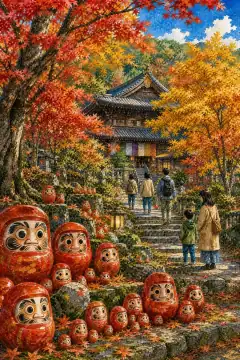
Katsuo-ji Temple
勝尾寺
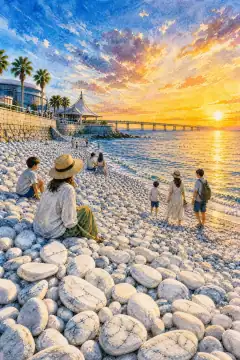
Marble Beach
マーブルビーチ
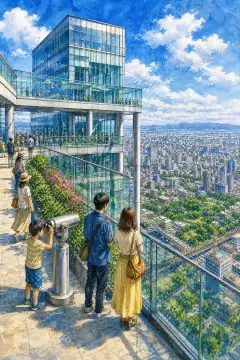
Abeno Harukas - Harukas 300
あべのハルカス ハルカス300
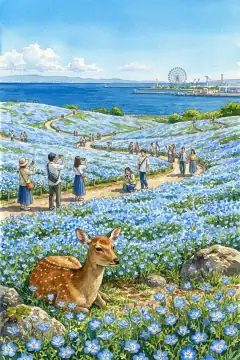
Maishima Seaside Park
舞洲シーサイドパーク
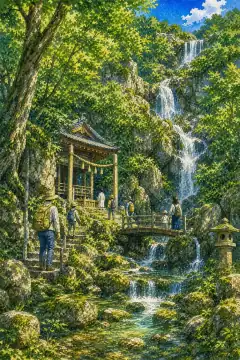
Inunaki-yama
犬鳴山
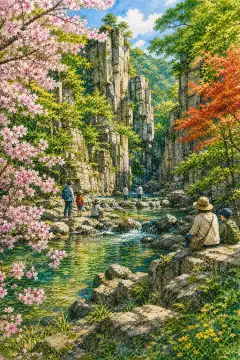
Settsukyo Park
摂津峡公園
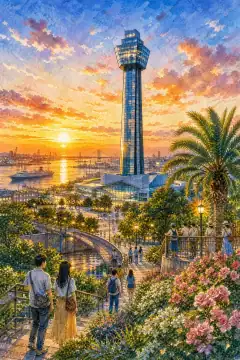
Sakishima Cosmo Tower Observatory
さきしまコスモタワー展望台
An Illustrated Japan
Townscape & Scenery
Streets, harbours, hillsides: the places that give a prefecture its face.
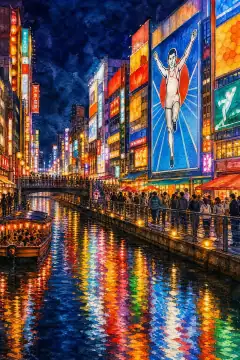
Dotonbori Neon District
道頓堀のネオン街
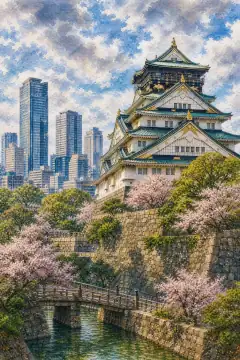
Osaka Castle
大阪城
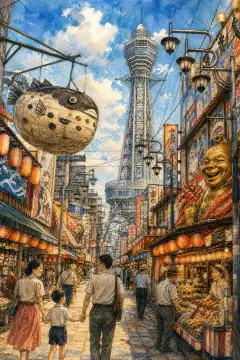
Shinsekai and Tsutenkaku
新世界と通天閣
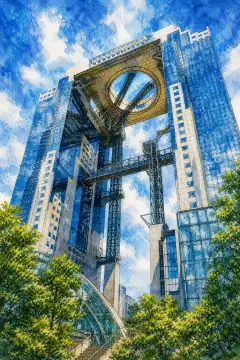
Umeda Sky Building
梅田スカイビル
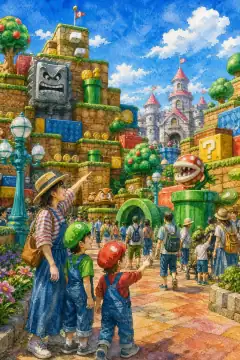
Universal Studios Japan (USJ)
ユニバーサル・スタジオ・ジャパン (USJ)
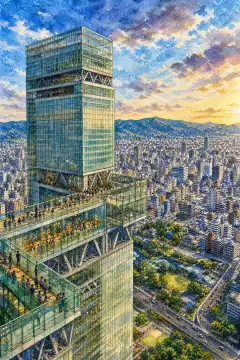
Abeno Harukas
あべのハルカス

Osaka Aquarium Kaiyukan
海遊館
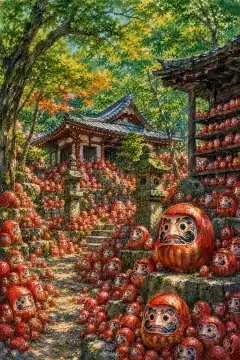
Katsuo-ji Temple
勝尾寺
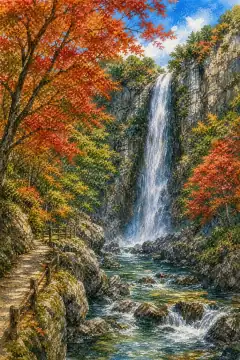
Minoh Falls
箕面大滝
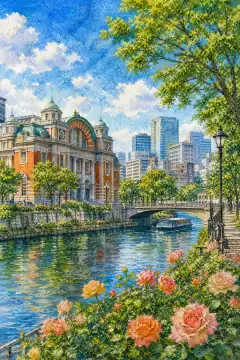
Nakanoshima
中之島
An Illustrated Japan
Culture & Tradition
Crafts, festivals, temples and the traditions still practised today.
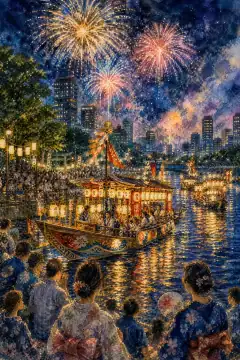
Tenjin Festival (Tenjin Matsuri)
天神祭
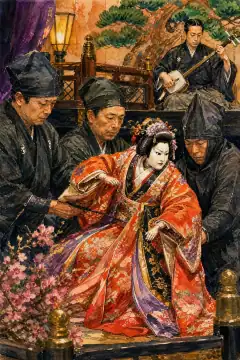
Bunraku (Japanese puppet theatre)
文楽(人形浄瑠璃)
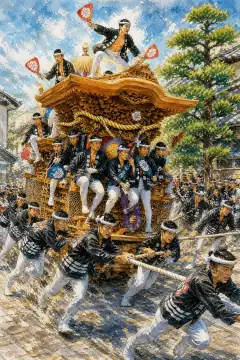
Kishiwada Danjiri Festival
岸和田だんじり祭
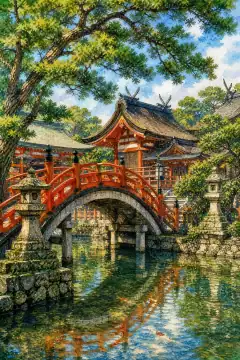
Sumiyoshi Taisha (Sumiyoshi Grand Shrine)
住吉大社

Sakai Cutlery
堺打刃物
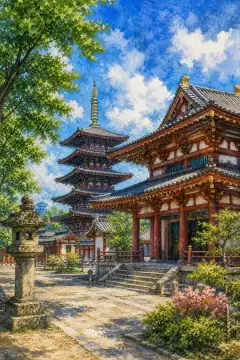
Shitenno-ji
四天王寺
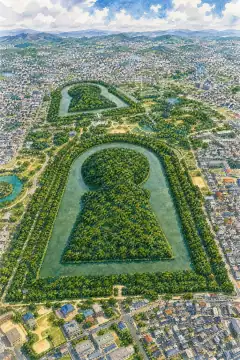
Mozu-Furuichi Kofun Group
百舌鳥・古市古墳群
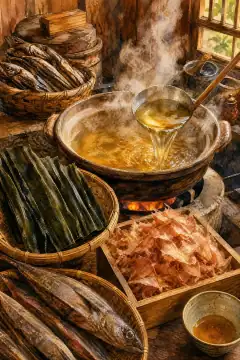
Dashi Culture
だし文化
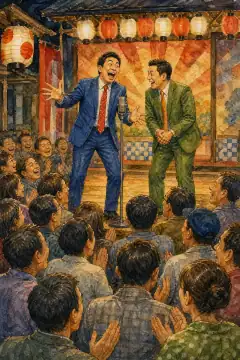
Osaka's Comedy Culture
お笑い文化

Senshu Towels
泉州タオル
An Illustrated Japan
Life & Daily
Food, bathhouses, morning routines — what an ordinary day tastes like.
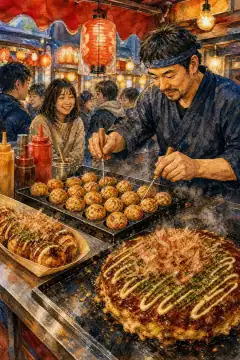
Street Food (Takoyaki & Okonomiyaki)
ストリートフード(たこ焼き・お好み焼き)
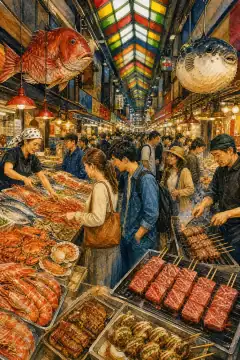
Kuromon Market
黒門市場
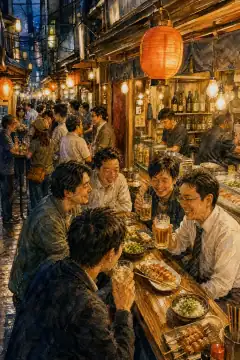
Standing Bars and Izakaya Culture (Ura-Namba & Tenma)
立ち飲み・居酒屋文化(裏なんば・天満)
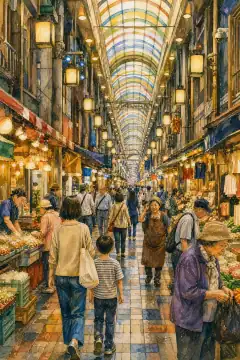
Tenjinbashisuji Shopping Street
天神橋筋商店街
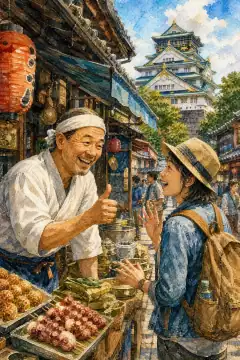
Osaka's Humor and Warm Hospitality
大阪のユーモアと人情
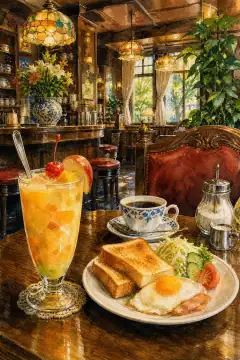
Kissaten Cafés and Mixed Juice
喫茶店とミックスジュース
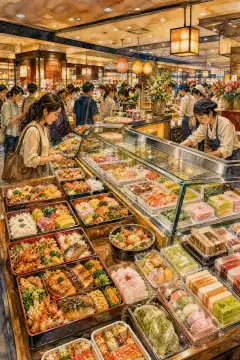
Depachika (Department Store Basement Food Hall)
デパ地下
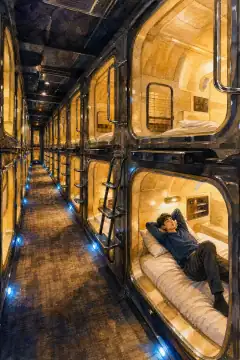
Capsule Hotel
カプセルホテル
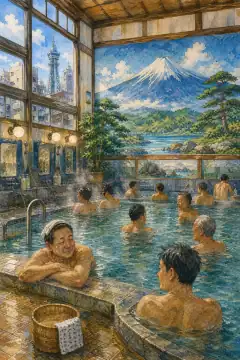
Public Bathhouses and Super Sentō (Large Bath Complexes)
銭湯・スーパー銭湯
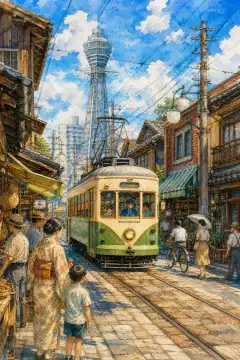
Hankai Tram ("Chin-Chin" Train)
阪堺電車(チンチン電車)
About Osaka
Osaka Prefecture is centered in Kinki on Honshu area only 1,905.26 square kilometers 46th smallest ahead only Kagawa but estimated population 8,758,785 July 1 2026 density 4,597 per square kilometer second densest after Tokyo and third most populous behind Tokyo and Kanagawa, GDP about 43.124 trillion yen 2022 second after Tokyo accounting US 318 billion. Capital Osaka City has 2.77 million people with 12,215 density ward. Geography centers on Osaka Plain surrounded north by Hokusetsu mountains continuing to Tamba highlands 600 meters, east by Ikoma and Kongo ranges bordering Nara creating barrier but Nara convo through, south by Izumi mountains 800 meters bordering Wakayama with Katsuragi peaks, southwest opening to Osaka Bay with Yodo River system including Okawa Dojima Tosabori Ajigawa flowing into bay canal network historic. Osaka Plain includes alluvial and terrace. Historically corresponds to eastern Settsu seven districts all Kawachi and all Izumi collectively called Sekkasen plus very small Tamba part annexed from Kyoto 1958 with Kashida village entire and part Kameoka city former Tamba Kuwa. Origin was Osaka Court established 1868 May 2 from Osaka Magistrate house where Tokugawa direct, integrated Takatsuki and Asada han prefectures 1871 after abolition han, absorbed Sakai Prefecture 1881 including Yamato Province then split Nara 1887 returning to near present boundaries of 43 municipalities. The name changed from Kosaka Osaka in medieval writings referencing Uemachi plateau height to Osaka 1868 with big claiming pun. Climate is Seto Inland Sea type warm relatively dry moderate year round with average temperature 17.6 Celsius annual precipitation about 1,338 millimeter in Osaka City observation 23 meters elevation, rare snow on plains one centimeter few times winter but frequent tropical nights summer due heat island effect over 40 days yearly muggy 67 percent humidity, typhoon season September maximum precipitation. Industry is commerce finance logistics hub Kinki with largest commercial land price Midosuji, birthplace Panasonic Sharp Ezaki Glico Suntory Kintetsu, chemical pharmaceutical companies Shionogi Takeda main plant machinery SMEs clustering Metal Smelting, Namba and Umeda fashion retail entertainment worldwide vibrancy, Universal Studios Japan theme park 15 million visitors Nintendo Super World and upcoming IR casino Expo 2025 site Yumeshima. Food culture takoyaki okonomiyaki kushikatsu as soul food chapter. Sightseeing sites include Osaka Castle Main Tower eight floor 1583 Toyotomi Hideyoshi original rebuilt 1931 concrete symbol plus Osaka Business Park OBP highrise office, Tsutenkaku Tower 108 meters in Shinsekai southern retro district Billiken statue, Dotonbori neon shops Ebisu Bridge Glico running man sign photospot, Mozu-Furuichi Kofun Group UNESCO World Heritage ancient burial mounds 49 keyhole shape tombs including Daisenryo Kofun reportedly Emperor Nintoku tomb one largest volume in world 486 m length 35 meter height 5th century mystery royal power, Kishiwada Danjiri Festival middle September pulling 1 tonne wood floats attached 200 meters rope at high speed turning corners thrilling four wheels taxing team, Tondabayashi Jinaimachi preserved Edo temple town Jodo Shinshu plum cloth 16 buildings autonomy. Tenjin Matsuri July 24-25 is one of three great festivals Japan with 100 boats evening fireworks Okawa River mikoshi embark.