Farm Tomita
Also written: ファーム富田 · 富田农场 · 富田農場
One of Japan's largest lavender fields, offering a vibrant sea of purple blooms in summer.
An Illustrated Japan

Mizuky Workshop / An Illustrated Japan / Hokkaido / Famous Views / Farm Tomita
Also written: ファーム富田 · 富田农场 · 富田農場
One of Japan's largest lavender fields, offering a vibrant sea of purple blooms in summer.
An Illustrated Japan
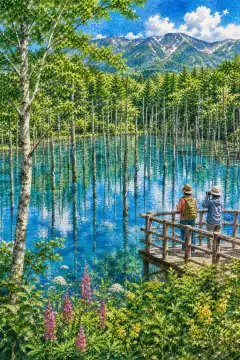
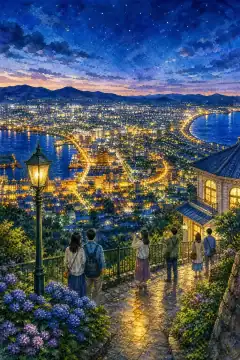
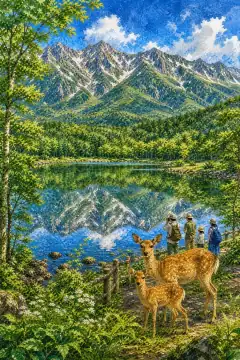
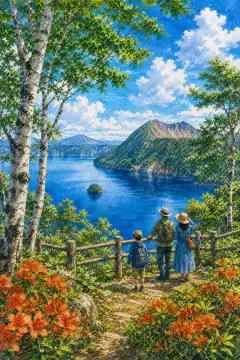
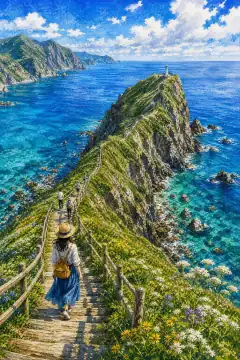
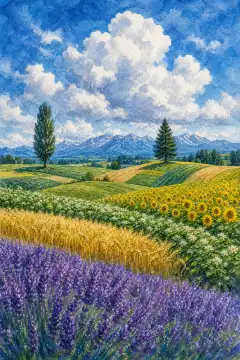
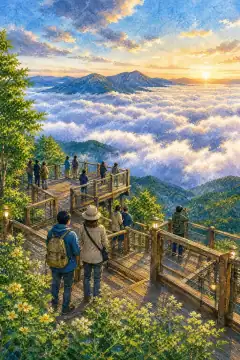
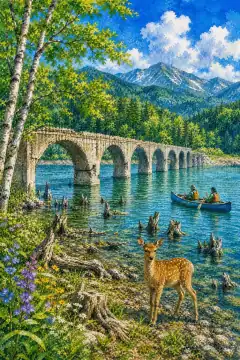
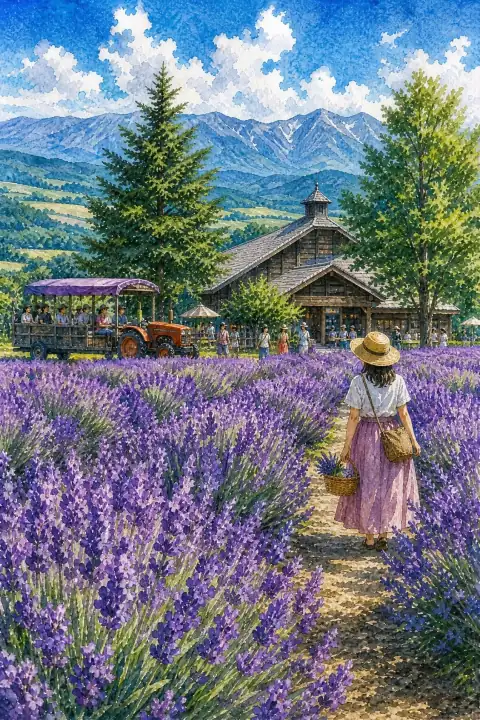
Farm Tomita in Hokkaido is Japan's largest lavender landscape, where in summer a purple carpet spreads across hills and vivid flower fields delight photographers, families, and fragrance lovers. The farm name traces to Tokuma Tomita who in 1903 settled in Nakafurano under the Hokkaido National Wasteland Disposal Act. His grandson Tadao began cultivating 10 ares of fragrance lavender in 1958, initially for perfume. In May 1976 a Japan National Railways calendar featured the fields, boosting visitors, and in 1990 the variety Okamurasaki won first place at the French Lavender Fragrance Fair, receiving a Chevalier title. The purple-carpet character remains the first impression, immediately capturing eyes. Local interpretation focuses on history, explaining pioneer hardships and crop shifts. Local radio introduces seasonal highlights, and since 2012 drone aerial footage is shown at information centers. Photographers are advised to balance wide and telephoto and to share tripod space and stagger times. The area once served as a timber and fishery hub, old warehouses now used as mini museums. Along paths seasonal flowers - narcissus spring, lavender summer, cosmos autumn - add color. Some lodgings offer early-departure breakfasts and shuttles; stay-based enjoyment has grown since around 2017. Checking weather and congestion beforehand is advised for safety. The farm's fragrant products - essential oils, soaps, soft serve - extend memory beyond sight. Seasonal transformation adds variety: spring brings meltwater brightness and tender greens, summer deep foliage and long daylight, autumn clear air and colored leaves, winter snow silence that emphasizes shape and sound. Light changes hourly, so early morning and late afternoon are soft and photogenic while midday emphasizes clarity and blue tones. Visitors who linger discover small details - wind movement across water, distant bird calls, texture of volcanic rock and larch bark - that become the most lasting memories. Respectful behavior, staying on paths, carrying out waste, and supporting local shops helps preserve this landscape for future generations while making travel more meaningful.