Mizuky Workshop / An Illustrated Japan / Chugoku / Hiroshima
Hiroshima
40 illustrations · 広島県 · 广岛县 · 廣島縣
Hiroshima Prefecture stretches from the island-speckled Seto Inland Sea to the ridgelines of the Chugoku Mountains, holding two UNESCO World Heritage sites: the floating torii of Itsukushima Shrine and the Atomic Bomb Dome. Home to Mazda and a resilient spirit rebuilt from wartime devastation into an International City of Peace, the prefecture weaves heavy manufacturing, artisan brush making, oyster rafts and lemon groves into a compact Seto Inland economy rich in both technology and taste. Cycling islands, savory okonomiyaki alleys and peaceful ferry crossings connect past and present in gentle daily itineraries for families.
An Illustrated Japan

Famous Views
The sights a prefecture is known for — the ones on the postcards, and a few that should be.
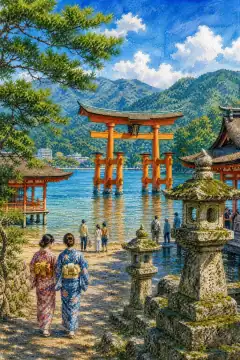
Itsukushima Shrine
厳島神社
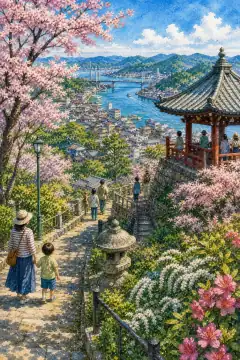
Senko-ji Park
千光寺公園
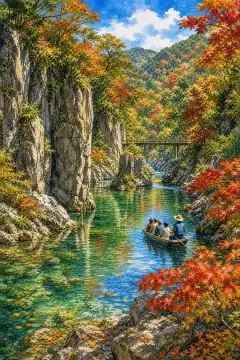
Taishaku Gorge
帝釈峡
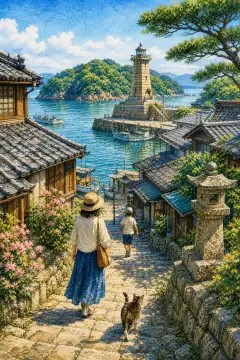
Tomonoura
鞆の浦
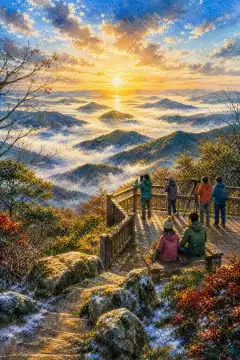
Hitsukage-yama
筆影山
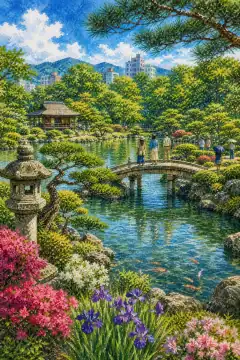
Shukkeien Garden
縮景園
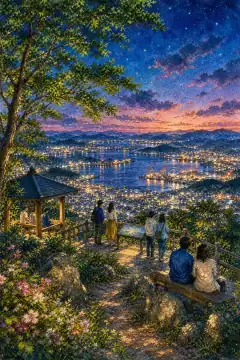
Haigamine
灰ヶ峰
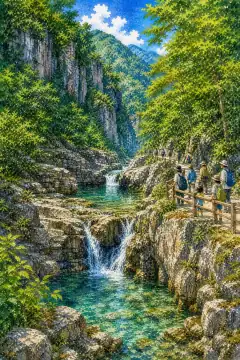
Sandan-kyo
三段峡
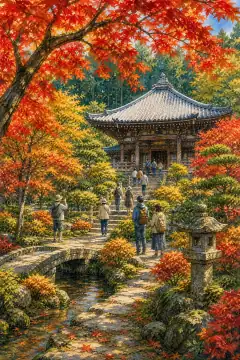
Buttsu-ji
佛通寺
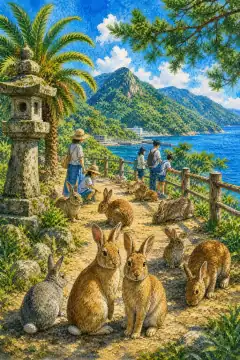
Okunoshima
大久野島
An Illustrated Japan
Townscape & Scenery
Streets, harbours, hillsides: the places that give a prefecture its face.
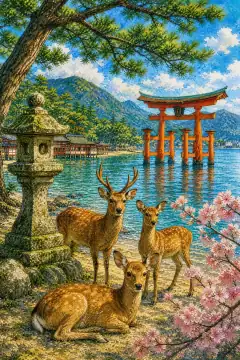
Miyajima (Itsukushima)
宮島(厳島)
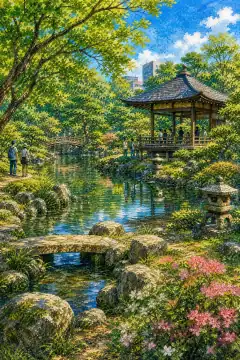
Shukkeien Garden
縮景園
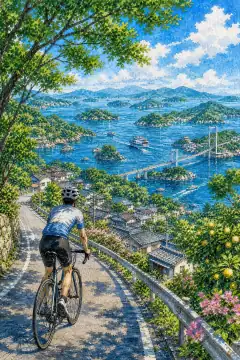
Seto Inland Sea
瀬戸内海の風景
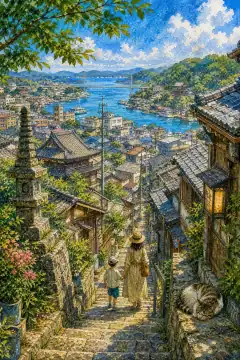
Streets of Onomichi
尾道の街並み
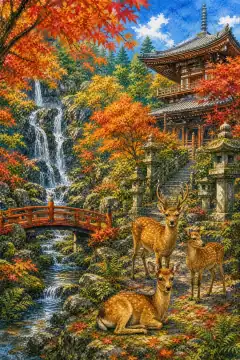
Mitaki-dera Temple
三滝寺
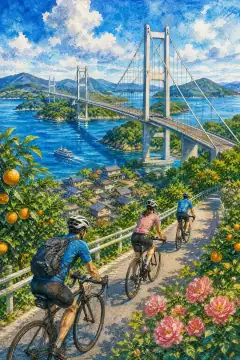
Shimanami Kaido
しまなみ海道
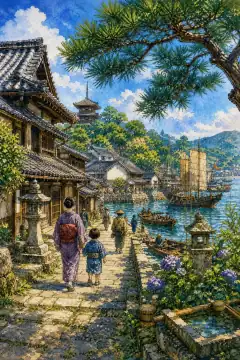
Tomonoura
鞆の浦
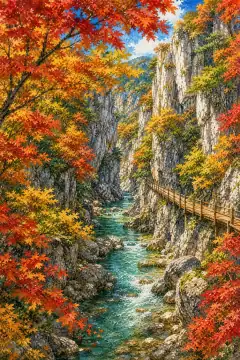
Taishaku Gorge
帝釈峡
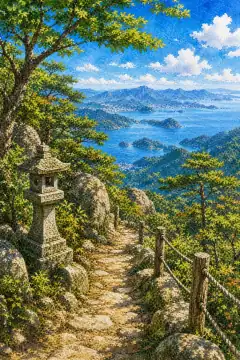
Mount Misen (Miyajima)
弥山(みせん)
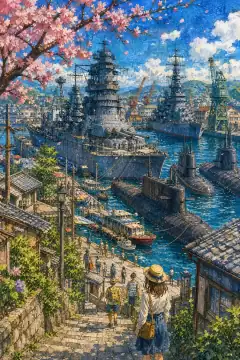
Kure Port Town
呉の港町
An Illustrated Japan
Culture & Tradition
Crafts, festivals, temples and the traditions still practised today.
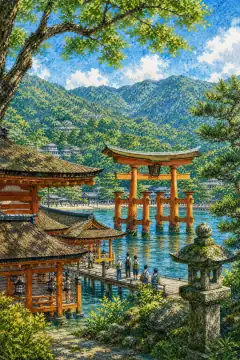
Itsukushima Shrine
厳島神社
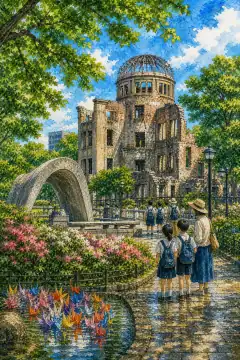
Atomic Bomb Dome and Peace Memorial Park
原爆ドームと平和記念公園
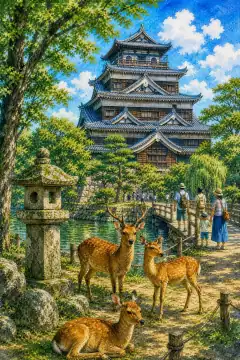
Hiroshima Castle
広島城
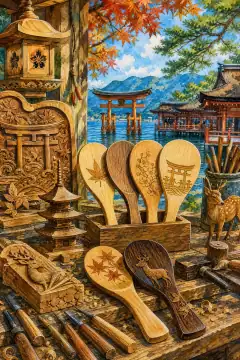
Miyajima Shamoji (Rice Paddle)
宮島細工・杓子
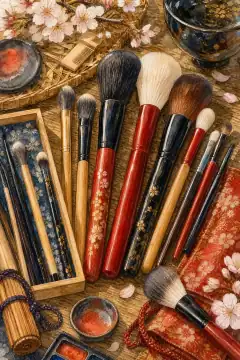
Kumano Brushes
熊野筆
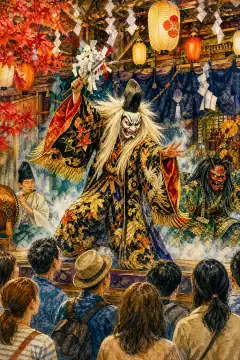
Kagura (Hiroshima Kagura)
神楽(ひろしま神楽)
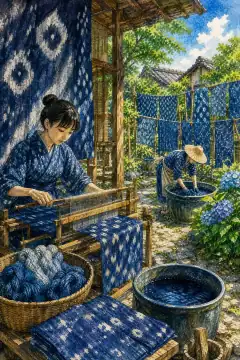
Bingo Kasuri
備後絣(びんごかすり)
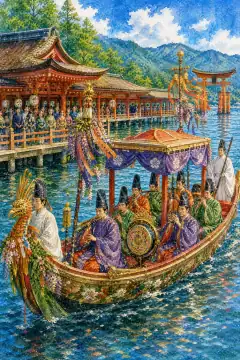
Kangensai (Gagaku Boat Festival)
管絃祭
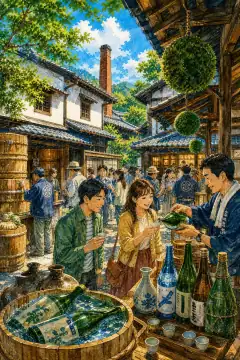
Saijo Sake Breweries (Hiroshima)
広島の日本酒(西条)
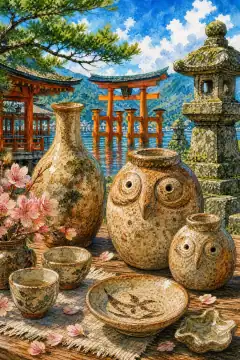
Miyajima-yaki (Osuna-yaki)
宮島焼(お砂焼)
An Illustrated Japan
Life & Daily
Food, bathhouses, morning routines — what an ordinary day tastes like.
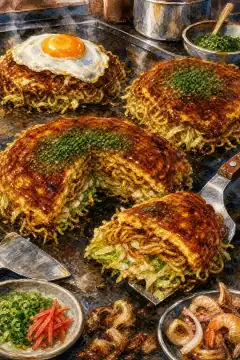
Hiroshima-style Okonomiyaki
お好み焼き(広島風)
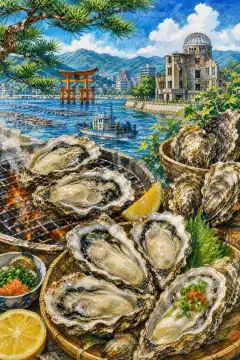
Hiroshima Oysters
牡蠣(カキ)
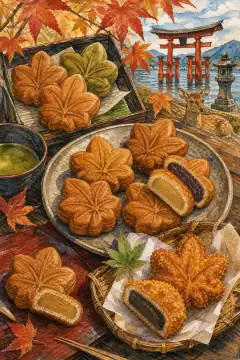
Momiji Manju
もみじ饅頭
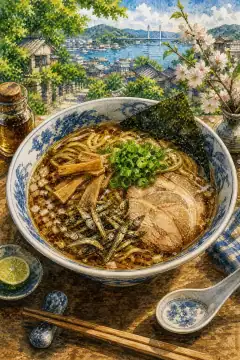
Onomichi Ramen
尾道ラーメン
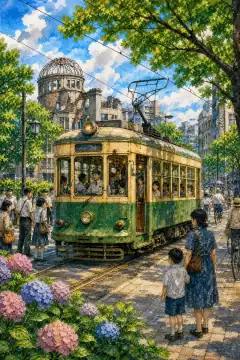
Hiroden Streetcar (Hiroshima Tram)
路面電車(広電)
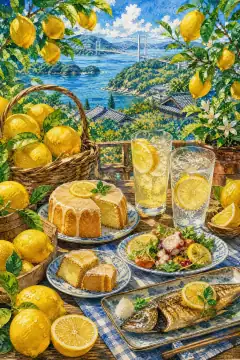
Setouchi Lemons
瀬戸内レモン
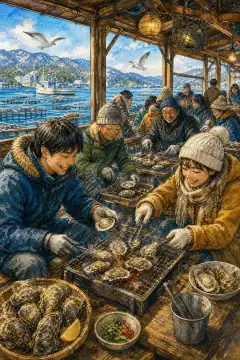
Hiroshima Oyster Huts
広島の牡蠣小屋
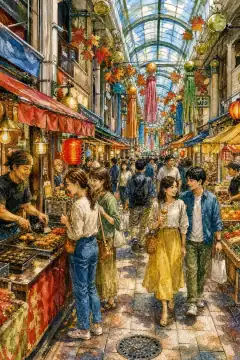
Hondori Shopping Arcade
本通商店街
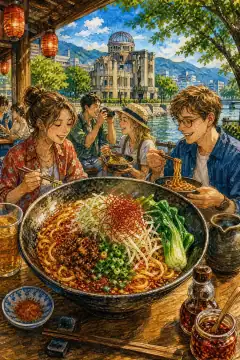
Soupless Tantanmen (Dry Dandan Noodles)
汁なし担々麺
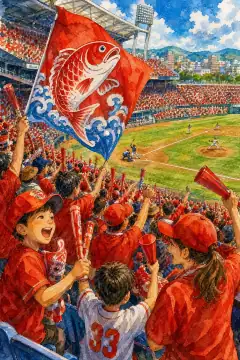
Hiroshima Carp Supporter Culture
カープ応援文化
About Hiroshima
Hiroshima Prefecture lies in southern Chugoku, covering 8,478.17 square kilometers with roughly 2.68 million residents, its political and economic hub being Hiroshima City, the largest agglomeration between Osaka and Fukuoka. Southern districts dissolve into the Seto Inland Sea, where jagged coastlines shelter oyster farms and citrus orchards on steep volcanic islands, while northern districts climb into the Chugoku Mountains where the Ota River and Go-no-kawa carve deep valleys separating hamlets with distinct winter snow cover.The area was historically divided into Aki and Bingo Provinces, rising to prominence under warlord Mori Motonari who from Aki briefly controlled much of western Honshu, before the Tokugawa shogunate installed the Asano family in Hiroshima with 420,000 koku and the Mizuno-Abe families in Fukuyama. In 1871 the abolition of domains created Hiroshima Prefecture, which annexed neighboring Fukuyama and other territories to reach its present shape. On August 6 1945 the city experienced the world's first atomic bombing, and its post-war reconstruction consciously chosen as a beacon for peace shapes modern identity.Climate reflects that gradient, with the coast enjoying mild, dry Seto Inland weather ideal for citrus, lowland rice and year-round cycling, while interior highlands receive heavy snow under Japan Sea air currents, sustaining tiny ski resorts and spring snowmelt agriculture. Economically the prefecture thrives on Mazda Motor Corporation headquartered in Fuchu, with engine plants and global R&D driving thousands of precision parts makers, combined with shipbuilding and steel in Kure, originally an Imperial Navy arsenal, and highly specialized crafts in Kumano where over eighty percent of Japan's calligraphy and cosmetics brushes are made. Food production excels with Hiroshima oysters grown on rafts accounting for more than half of national output and Setoda lemons and Hassaku oranges prized for their Seto terroir.Visitors gravitate to Miyajima Island where Itsukushima Shrine appears to float at high tide and wild deer roam maple lanes, to the Atomic Bomb Dome preserved as ruin and the Peace Memorial Museum documenting survivor stories, to Onomichi's maze of temple paths and literary slopes leading to Shimanami Kaido, a 70-kilometer bicycle route hopping seven bridges toward Ehime with wind and island panorama, and to Tomonoura harbor where Edo-period warehouses recall waiting tides. Hiroshima merges solemn remembrance with sunlit archipelago beauty and engineering pride, leaving a layered impression of resilience and openness. Hiroshima also nurtures Setouchi contemporary music and peace education tourism, where students gather for testimonies and volunteer at community islands. Local okonomiyaki sauce production and citrus liqueurs increasingly support nighttime culinary walks, reinforcing the prefecture's blend of remembrance and everyday brightness.