Mizuky Workshop / An Illustrated Japan / Kyushu-Okinawa / Miyazaki
Miyazaki
40 illustrations · 宮崎県 · 宫崎县 · 宮崎縣
Miyazaki Prefecture at the southeastern tip of Kyushu faces the Pacific Ocean and Hyuga-nada, ranking among Japan's top prefectures for sunshine hours and evoking a subtropical resort mood. The legendary heartland of Hyuga mythology where the sun goddess's grandson descended, it has the rare history of being abolished into Kagoshima in 1876 and re-established in 1883. Today it attracts visitors with professional baseball spring camps, luxury Miyazaki mango, Miyazaki beef, shochu culture, and mythological tourism centered on Takachiho Gorge and Aoshima Island.
An Illustrated Japan

Famous Views
The sights a prefecture is known for — the ones on the postcards, and a few that should be.
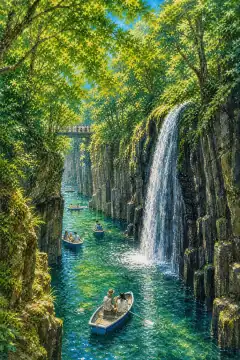
Takachiho Gorge
高千穂峡
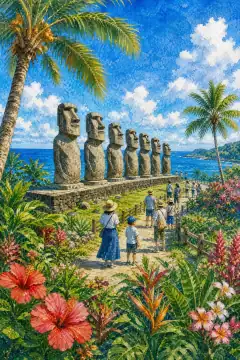
Sun Messe Nichinan
サンメッセ日南
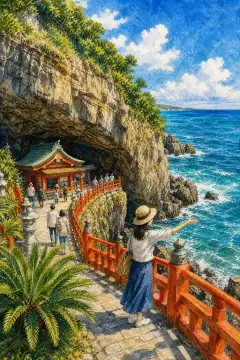
Udo Jingu
鵜戸神宮
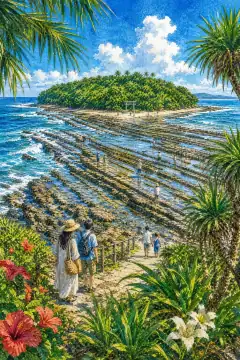
Aoshima
青島
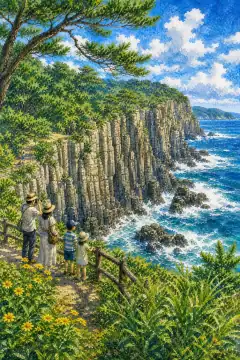
Uma-ga-se
馬ヶ背
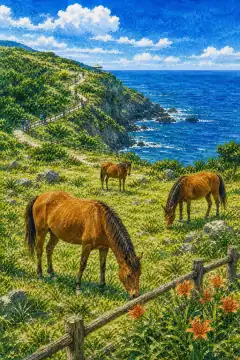
Toi Misaki
都井岬
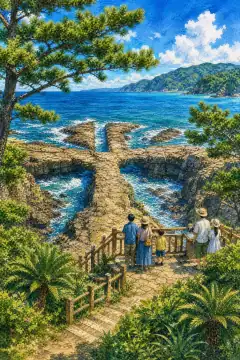
Kurusu no Umi
クルスの海
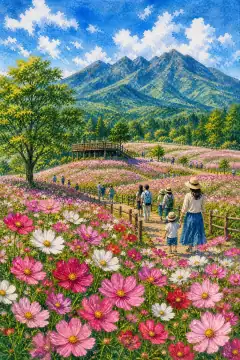
Ikoma Kogen
生駒高原
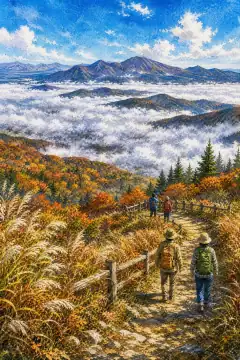
Yadake Kogen
矢岳高原
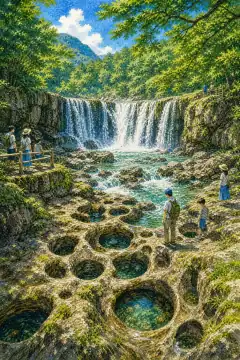
Sekinoo Falls
関之尾滝
An Illustrated Japan
Townscape & Scenery
Streets, harbours, hillsides: the places that give a prefecture its face.
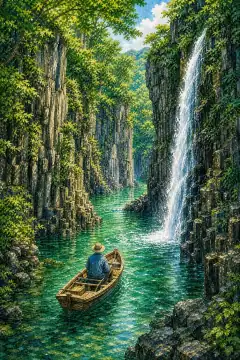
Takachiho Gorge
高千穂峡
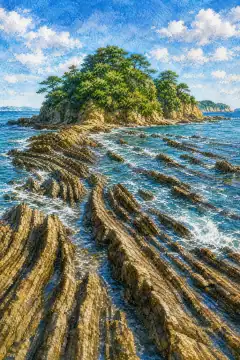
Aoshima Island and the Devil's Washboard
青島と鬼の洗濯板
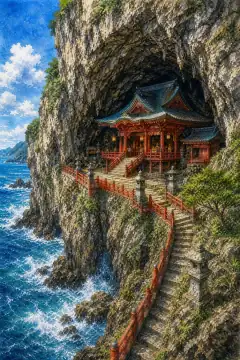
Udo Shrine (Udo-jingu)
鵜戸神宮

Nichinan Coast
日南海岸
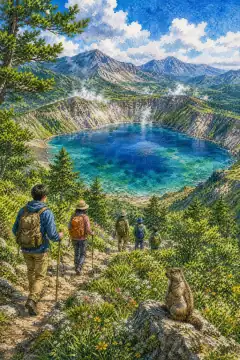
Ebino Plateau
えびの高原
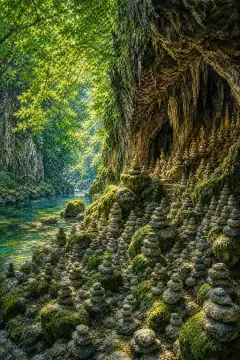
Amano Yasugawara Cave
天安河原
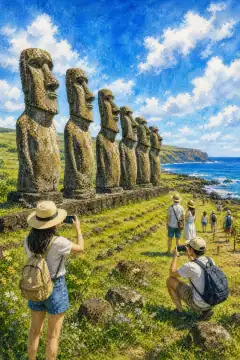
Sun Messe Nichinan
サンメッセ日南
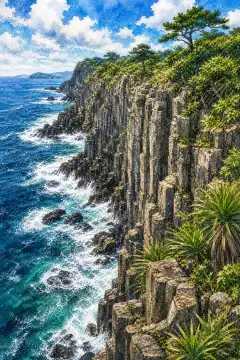
Umagase Cliff
馬ヶ背
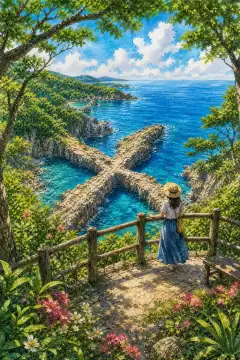
Cruz no Umi (Sea of the Cross)
クルスの海
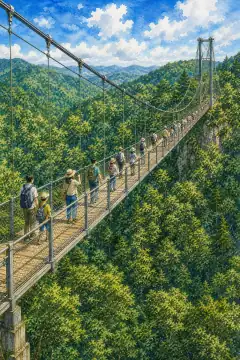
Aya Teruha Great Suspension Bridge
綾の照葉大吊橋
An Illustrated Japan
Culture & Tradition
Crafts, festivals, temples and the traditions still practised today.
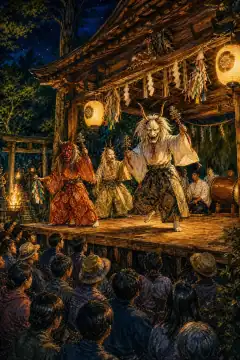
Takachiho Night Kagura
高千穂の夜神楽
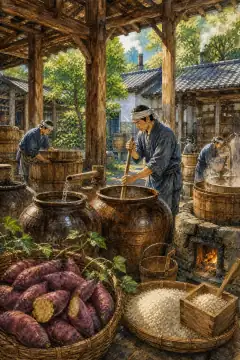
Shochu Culture
焼酎文化
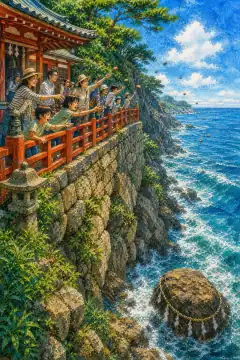
Undama Throwing at Udo Shrine
鵜戸神宮の運玉投げ
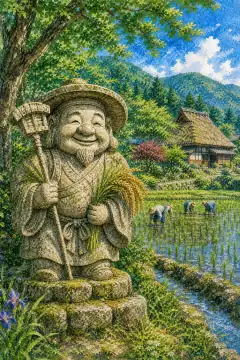
Tanokansaa (Rice-Field Deity)
田の神さあ(タノカンサア)
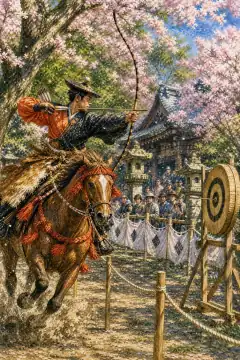
Yabusame at Miyazaki Shrine
宮崎神宮の流鏑馬
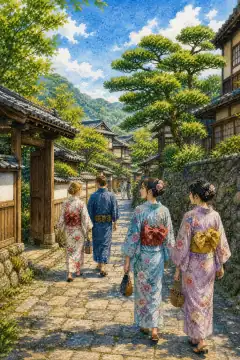
Obi Castle Town
飫肥城下町
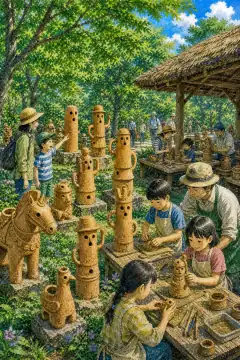
Haniwa Workshop
はにわ作り
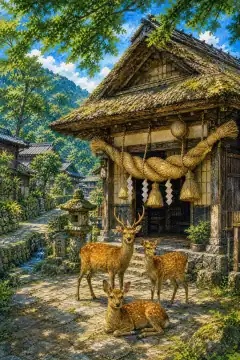
Shimenawa of the Land of Myths
神話の里のしめ縄
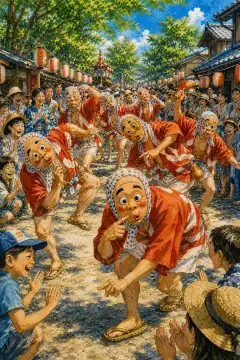
Hyuga Hyottoko Summer Festival
日向ひょっとこ夏祭り
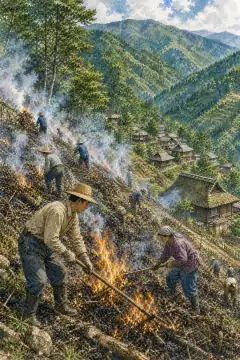
Slash-and-burn Farming in Shiiba Village
椎葉村の焼畑農業
An Illustrated Japan
Life & Daily
Food, bathhouses, morning routines — what an ordinary day tastes like.
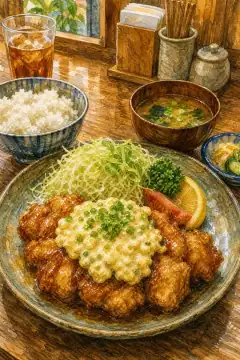
Chicken Nanban
チキン南蛮
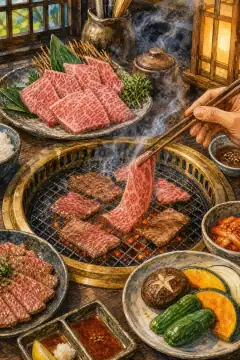
Charcoal-Grilled Miyazaki Beef
宮崎牛の炭火焼き
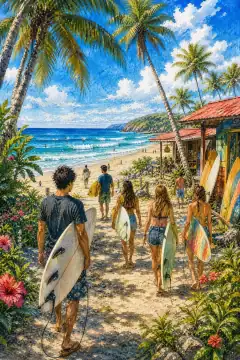
Surf Culture
サーフィン文化
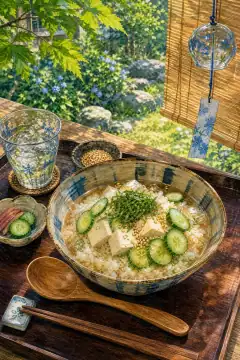
Hiyajiru (Cold Miso Soup)
冷や汁
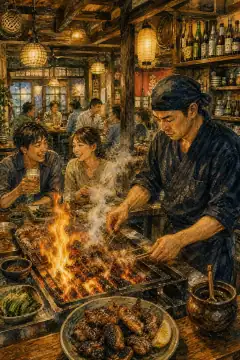
Charcoal-Grilled Jidori at an Izakaya
居酒屋での地鶏炭火焼き
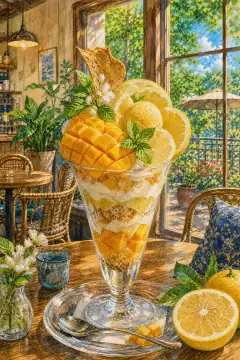
Fruit Parfait Culture
フルーツパフェ文化
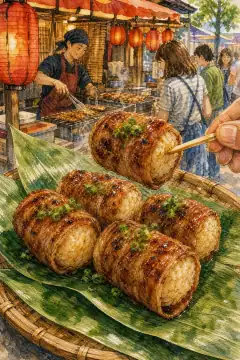
Nikumaki Onigiri (Pork-Wrapped Rice Ball)
肉巻きおにぎり
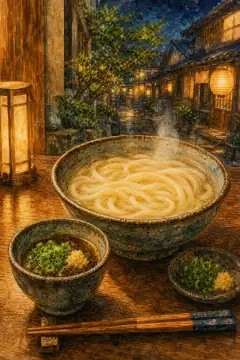
Kama-age Udon
釜揚げうどん
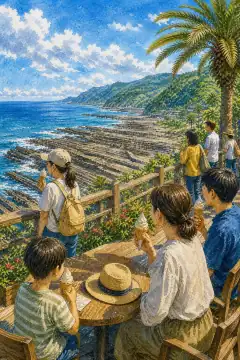
Phoenix Roadside Station (Michi-no-Eki)
道の駅フェニックス
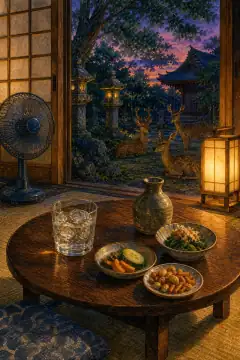
Dare-yami (shochu evening ritual)
焼酎の「だれやみ」
About Miyazaki
Miyazaki Prefecture spans 7,734.05 square kilometers, population about 1.01 million, capital Miyazaki City 400,000 largest. It occupies the southeastern tip from 31°21' to 32°50' N, bounded by Oita, Kumamoto and Kagoshima, west Kyushu Mountains, east Miyazaki Plain opening to Pacific and Hyuga-nada with Gokase, Omaru rivers. Old province was Hyuga-no-Kuni, center of Hyuga myth where Kojiki tales place Amaterasu's cave. After Haihan-chiken, Obi, Nobeoka, Takanabe, Sadowara were merged into Mimitsu and Miyakonojo prefectures in 1871, then into first Miyazaki Prefecture on January 15, 1873 with office at Kami-Beppu Village then hamlet but central. On August 21, 1876 it was merged into Kagoshima and downgraded to Miyazaki Branch, leading to discontent as Satsuma prioritized reconstruction after 1877 Seinan War while tax collection in former Hyuga felt heavier. The Bunken Undo separation movement led by Kawagoe Susumu former Obi samurai resulted in re-establishment of Miyazaki on May 9, 1883 together with Toyama and Saga under Dajokan Proclamation No.15, separating old Hyuga except three villages that remain in Kagoshima like Shibushi now Kagoshima. Climate has some of Japan's top sunshine hours about 2,100 hours and high rainfall, especially Ebino Plateau and Mt. Wanazuka among Japan's wettest with over 3,000 mm due to orographic lift. Coastal plains rarely see snow; first snow not observed some years in Miyazaki City, southern coast south of Hyuga frost-free zone, but winter west winds bring many clear days 70 percent sunny ideal for sports training with average 8.1C in January warmest among uniform sunshine areas, attracting pro teams: Yomiuri Giants at Himuka Stadium since long and SoftBank Hawks at Ikime. Summer muggy from southeast monsoon but peak heat often from southwest föhn in late rainy season before typhoon period with 26-27C, less 40C due to sea breeze. Ebino at 1,150m records minus 20.2C in 1968 coldest in Kyushu. Typhoon Ginza many typhoons approach June-October bringing prolonged easterly rain causing landslides, 2005 Typhoon Nabi heavy damage. Industry benefits warmth: greenhouse mango Miyazaki brand high sugar branded Taiyo no Tamago sun egg over 3,000 yen, Hyuganatsu citrus summer orange, kumquat eaten with skin, tea Miyakonojo and Yabe, beef Miyazaki-gyu won Wagyu Olympics Prime Minister Award 2022, chicken Miyazaki Jitokko cross with unique texture, pork, shochu sweet potato Kogane Sengan, forestry Obi cedar 400-year plantation and natural cedar Yamasakura. Sports tourism national-level. Sightseeing highlights include Takachiho Gorge with Manai Falls 17m and legend Amano-Iwato cave where Amaterasu hid and Mt. Takachiho-mine 1,574m where Ninigi-no-Mikoto descended per Kojiki, Aoshima Island with washboard-like Oni-no-Sentakuita from uplifted sandstone 8 km and Aoshima Shrine in subtropical plants with wish tying, Udo Jingu shrine in cliff cave facing sea where lucky stones thrown into hole for luck, Nichinan Coast Quasi-National Park with Sun-messe Nichinan Moai 7 replicas permitted, Toi Cape wild horses 100 heads designated natural monument, Miyazaki Jingu dedicated to Jinmu Emperor first emperor with forest quiet, Peace Park's Tower of Haniwa clay figures 400 replicas hill, Saito Burial Mounds 333 kofun largest in Kyushu.