Mizuky Workshop / An Illustrated Japan / Kyushu-Okinawa / Kumamoto
Kumamoto
40 illustrations · 熊本県 · 熊本县 · 熊本縣
Central Kyushu's Kumamoto spans from the vast Aso Caldera, one of the world's largest, to the fertile Kumamoto Plain and the Amakusa archipelago. Ranking second in Kyushu by population with its capital at Kumamoto City, the Land of Fire, or Hi-no-Kuni, blends samurai heritage with natural wonders. Kato Kiyomasa's Kumamoto Castle dominates the city, while gorges, volcanic plateaus and island churches support a growing semiconductor and agriculture economy symbolized by Kumamon. This blend of volcanoes, coastlines, historic trading heritage and modern innovation makes the prefecture a compelling destination for cultural travelers and nature lovers seeking authentic Kyushu experiences year-round.
An Illustrated Japan

Famous Views
The sights a prefecture is known for — the ones on the postcards, and a few that should be.
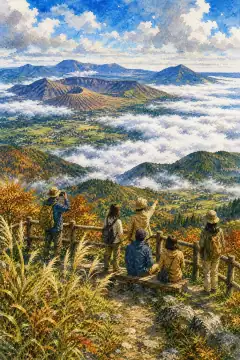
Daikanbo
大観峰
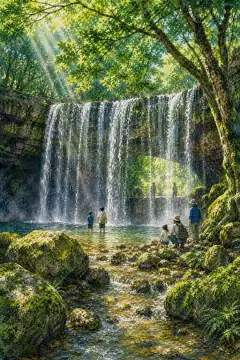
Nabegataki Falls
鍋ヶ滝
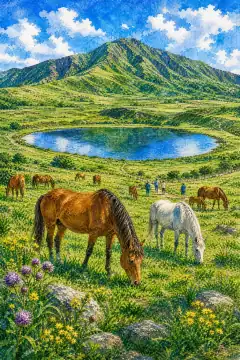
Kusasenri
草千里ヶ浜
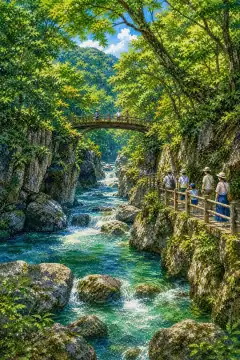
Kikuchi Gorge
菊池渓谷
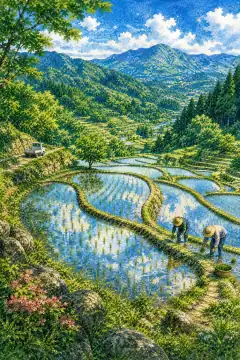
Sen Tanada
扇棚田
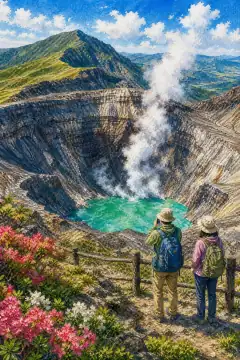
Aso Nakadake Crater
阿蘇中岳火口

Nagabeta Kaichoro
長部田海床路
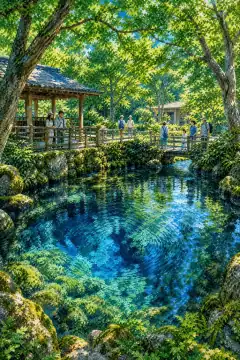
Ikeyama Suigen
池山水源
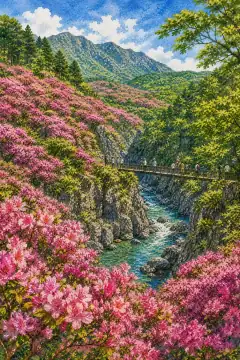
Senyu Gorge
仙酔峡
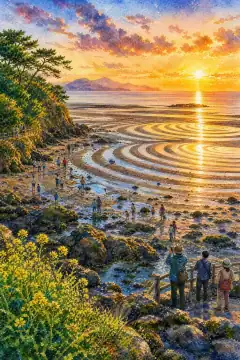
Goyorai Coast
御輿来海岸
An Illustrated Japan
Townscape & Scenery
Streets, harbours, hillsides: the places that give a prefecture its face.
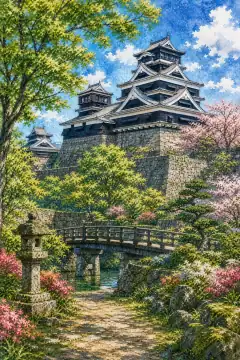
Kumamoto Castle
熊本城
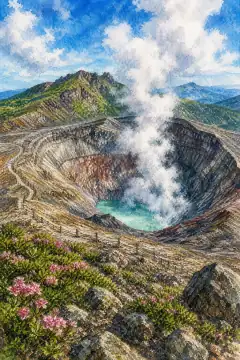
Mount Aso (Nakadake Crater)
阿蘇山(中岳火口)
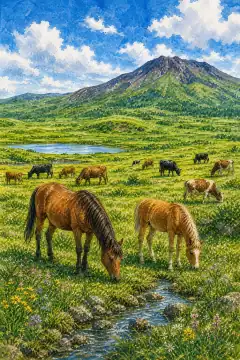
Kusasenri-ga-hama (Kusasenri Plain)
草千里ヶ浜
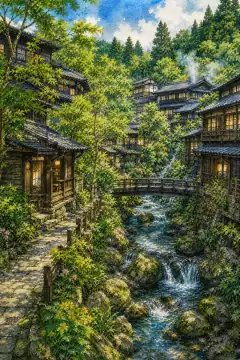
Kurokawa Onsen townscape
黒川温泉の街並み
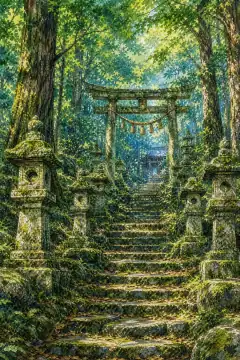
Kamishikimi Kumanoimasu Shrine
上色見熊野座神社
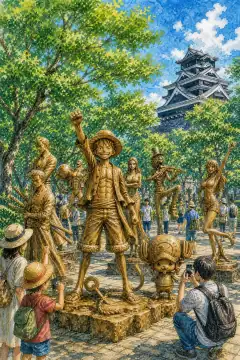
One Piece Statues
ワンピース像
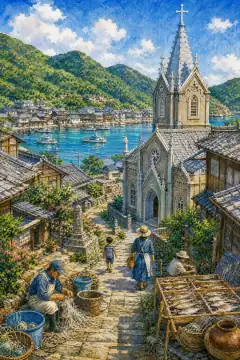
Sakitsu Village
崎津集落
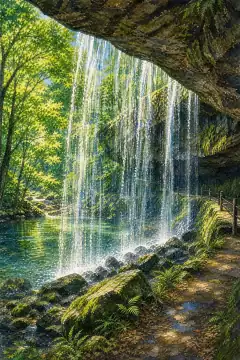
Nabegataki Falls
鍋ヶ滝
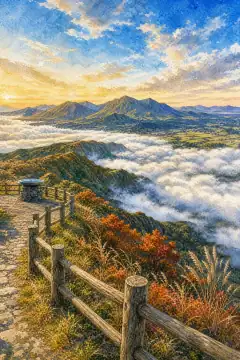
Daikanbo Observatory
大観峰
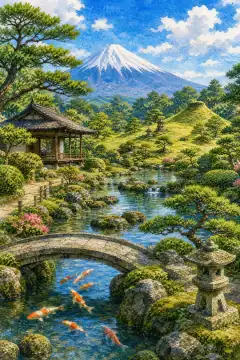
Suizenji Jojuen Garden
水前寺成趣園
An Illustrated Japan
Culture & Tradition
Crafts, festivals, temples and the traditions still practised today.
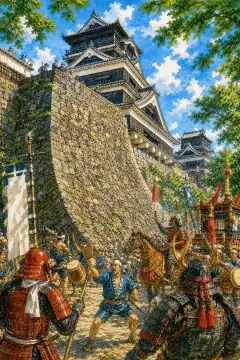
Mushagaeshi (steep curved stone walls) at Kumamoto Castle
熊本城の武者返し
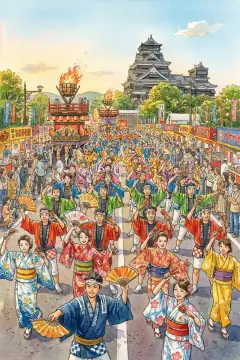
Hinokuni Festival (Land of Fire Festival)
火の国まつり
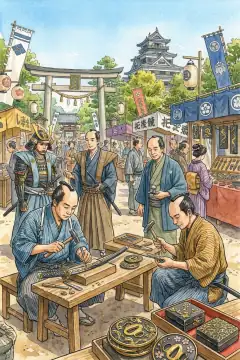
Higo Zogan (Higo metal inlay)
肥後象がん
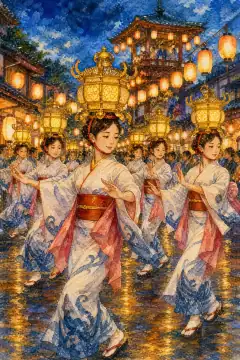
Yamaga Toro Festival
山鹿灯籠まつり
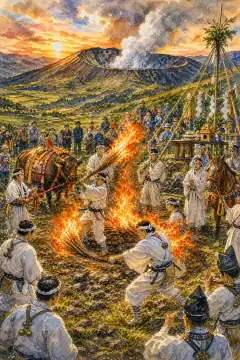
Aso Agricultural Rituals
阿蘇の農耕祭事
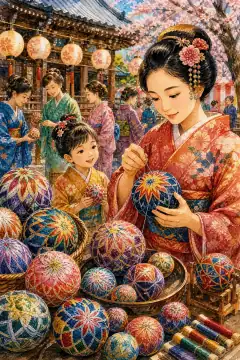
Higo Temari
肥後てまり

Obake no Kinta (Kinta the Ghost)
おばけの金太
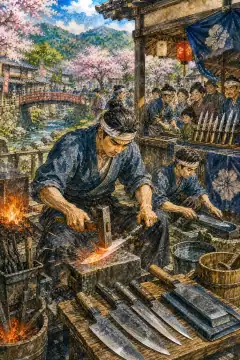
Kawashiri Knives
川尻刃物
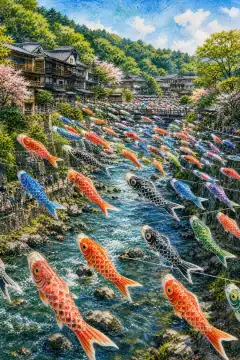
Carp Streamer Festival at Tsuetate Onsen
杖立温泉の鯉のぼり祭り
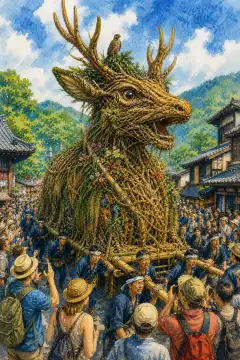
Hassaku Festival — Giant Natural Floats
八朔祭の大造り物
An Illustrated Japan
Life & Daily
Food, bathhouses, morning routines — what an ordinary day tastes like.
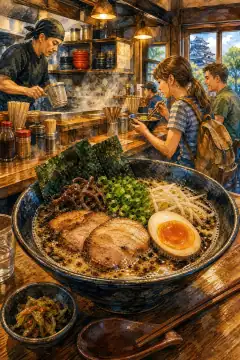
Kumamoto Ramen
熊本ラーメン
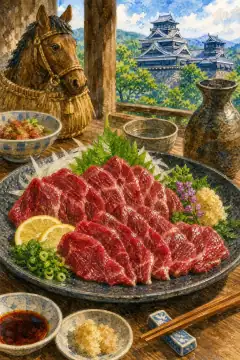
Basashi (Horse Sashimi / "Sakura-niku")
馬刺し(桜肉)
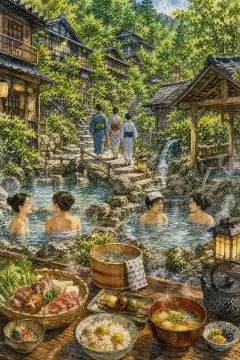
Bath-Hopping at Kurokawa Onsen
黒川温泉の湯めぐり
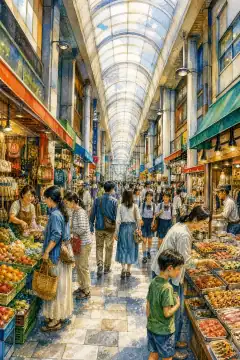
Shimotori Arcade
下通アーケード街
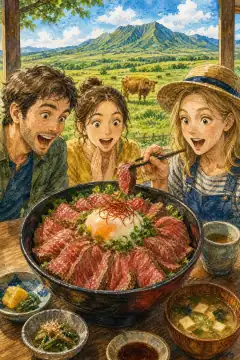
Akaushi Beef Bowl
あか牛丼
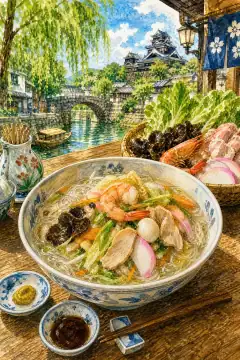
Taipien (Taipingyan)
タイピーエン(太平燕)
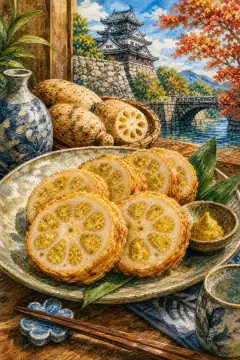
Karashi Renkon (Mustard‑Stuffed Lotus Root)
からし蓮根
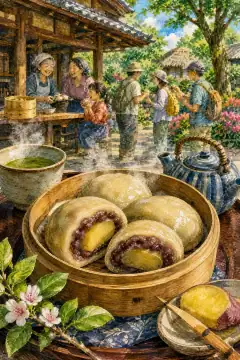
Ikinari Dango (Steamed Sweet Potato and Red Bean Dumpling)
いきなり団子
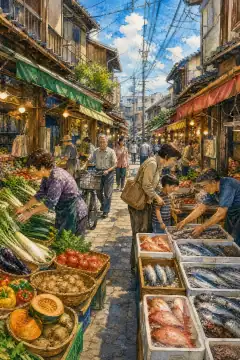
Kogai Shopping Street
子飼商店街
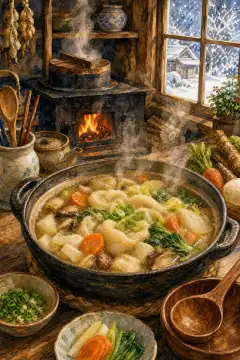
Dago-jiru (dumpling soup)
だご汁
About Kumamoto
Kumamoto Prefecture spans about 7,409.13 square kilometers, population about 1.67 million, capital Kumamoto City, a designated major city of over 700,000 whose water supply is entirely groundwater, rare worldwide. Located in the middle of Kyushu main island, it borders Fukuoka, Oita, Miyazaki, Kagoshima and, across Ariake Sea, Nagasaki. Eastern highlands include Mt. Aso with a caldera 18 by 25 kilometers wide, the second widest in the world, and the Kyushu mountains including Mt. Sobo-Katamuki Quasi-National Park 1,756 meters. Western lowlands spread into the Kumamoto Plain facing Ariake Sea and Yatsushiro Plain facing Yatsushiro Sea, while the Uto Peninsula leads to the Amakusa archipelago connected by Amakusa Five Bridges. The old province was Higo, also called Hi-no-Kuni, Land of Fire, due to volcanic activity and mysterious sea fires of Shiranui observed on Yatsushiro Sea. In 1871, during Haihan-chiken, Kumamoto and Hitoyoshi Prefectures were created, merged into Shirakawa Prefecture in 1872, then combined with Yatsushiro to form Shirakawa in 1873, and renamed Kumamoto in February 1876. The Hosokawa clan ruled 540,000 koku, and the Kumamoto Yo Gakko with Leroy Lansing Janes formed the Kumamoto Band which influenced Protestant Christianity in Japan. Climate is Pacific-type warm but with large temperature swings. Kumamoto City averages 17.2C, but basin effects make summers extremely humid with many days over 35C, peak over 100 tropical days in 2005, and winter mornings often below freezing, the most winter days in Kyushu with 10.5 days in January. Aso mountain zone is cold with frequent snow and 3,009 mm annual rain, summer never reaching 30C at summit while winter reaches minus 15C. The Amakusa coast is oceanic with mild winters 16-17C average. Industry combines strong agriculture in rice, watermelon largest output in Japan, tomato, horse meat basashi culturally popular, and livestock with growing semiconductor manufacturing, Kumamoto's unique all-groundwater supply supporting clean fabs, attracting TSMC with Sony and Denso JV JASM in Kikuyo Town, boosting economy with land prices surging. Kumamon mascot as Sales Manager spawned 1.46 trillion yen merchandise sales and global recognition with 30,000 products. Tourism highlights include Kumamoto Castle, rebuilt after 2016 Kumamoto earthquake damage with black walls and stone walls called Musha-gaeshi, Aso Volcano Museum and Kusasenri plateau with horses grazing, Tsujun Bridge aqueduct Edo-era water supply with arched sluice release still performing, Kurokawa Onsen with rotenburo forest baths selected as one of Japan's best onsen towns, Yamaga lantern festival where women wear gold lanterns 1,000 paper, Kuma River rafting one of Japan's three fastest rapids with 90 km course, Sakitsu Village hidden Christian site in Amakusa with tide-influenced chapel built by private funds arranging altar to see sea, plus Amakusa's Dolphin watching and Gokyo Bridge chain and Gokase River valleys and Kikuchi Gorge lime blue water.