Mizuky Workshop / An Illustrated Japan / Kyushu-Okinawa / Nagasaki
Nagasaki
40 illustrations · 長崎県 · 长崎县 · 長崎縣
Nagasaki Prefecture at Japan's western edge holds 1,479 islands, the most in the nation, with coastline second only to Hokkaido. Warm from the Tsushima Current yet frequently struck by typhoons, it served as Japan's sole gateway to the West during the Edo sakoku isolation, fostering enduring Christian heritage, Dejima Dutch trade history, and scenic port cities. Shipbuilding, fisheries, and tourism support its economy, while world-class night views from Mount Inasa draw visitors year-round to this maritime prefecture. This blend of volcanoes, coastlines, historic trading heritage and modern innovation makes the prefecture a compelling destination for cultural travelers and nature lovers seeking authentic Kyushu experiences year-round.
An Illustrated Japan

Famous Views
The sights a prefecture is known for — the ones on the postcards, and a few that should be.
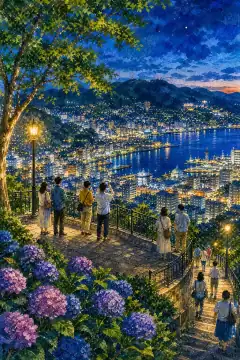
Inasayama
稲佐山
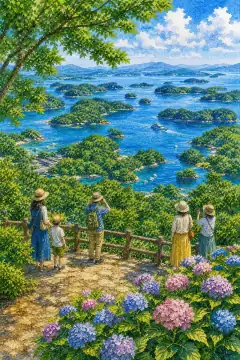
Tenkaiho
展海峰
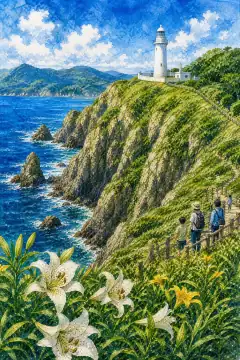
Osezaki Cliffs
大瀬崎断崖
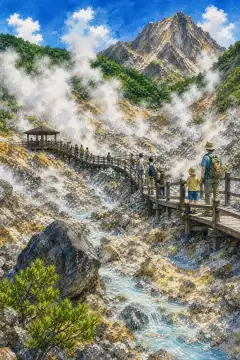
Unzen Jigoku
雲仙地獄
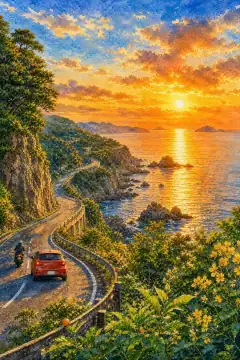
Ikitsuki Sunset Way
生月サンセットウェイ
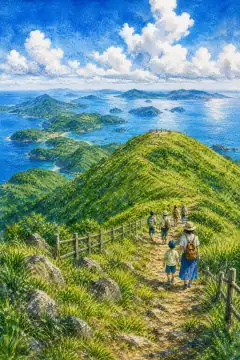
Onidake
鬼岳
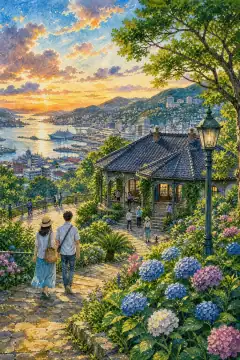
Nabekanmuri-yama Park
鍋冠山公園
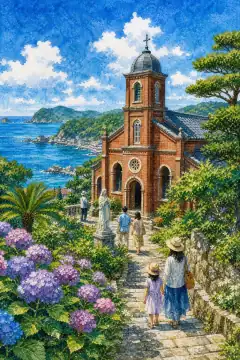
Dosaki Church
堂崎天主堂
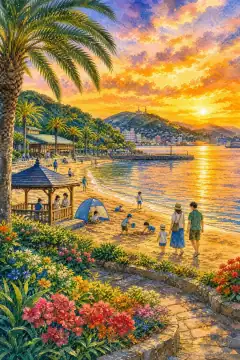
Yui no Hama Marine Park
結の浜マリンパーク
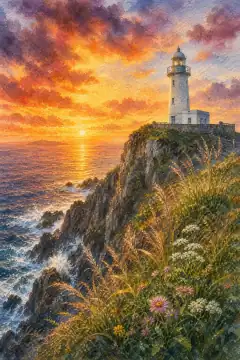
Osezaki Lighthouse
大瀬崎灯台
An Illustrated Japan
Townscape & Scenery
Streets, harbours, hillsides: the places that give a prefecture its face.
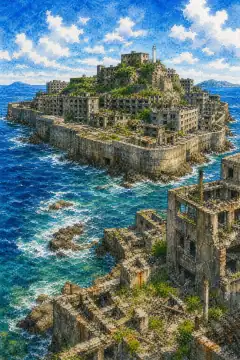
Gunkanjima (Hashima Island)
軍艦島(端島)
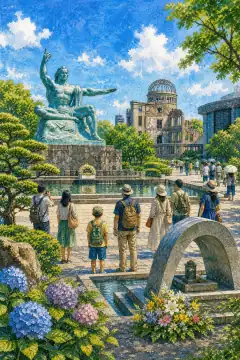
Nagasaki Peace Park and Atomic Bomb Museum
平和公園・原爆資料館
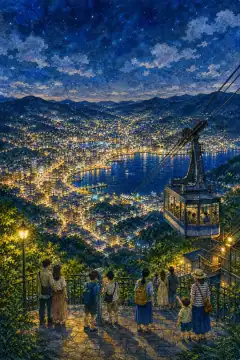
Night View from Mount Inasa
稲佐山からの夜景
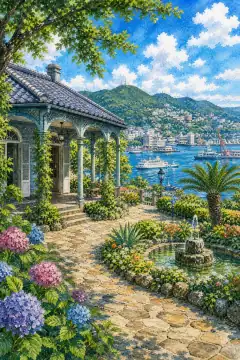
Glover Garden
グラバー園
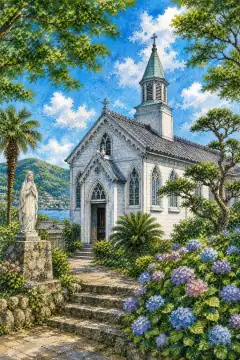
Oura Church
大浦天主堂
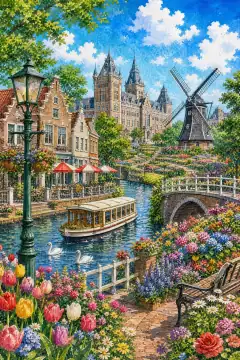
Huis Ten Bosch
ハウステンボス
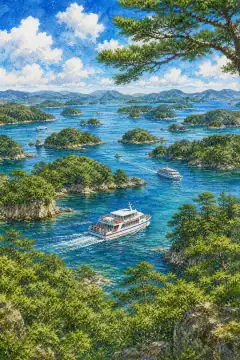
Kujuku Islands (Kujukushima)
九十九島
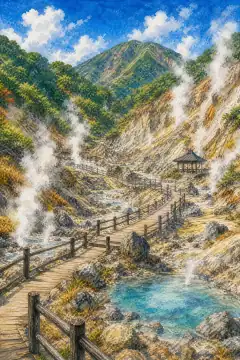
Unzen Jigoku (Unzen Hell)
雲仙地獄
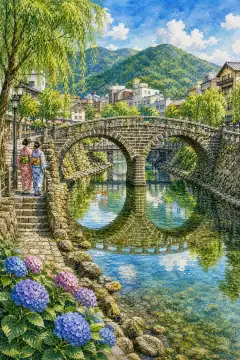
Meganebashi (Spectacles Bridge)
眼鏡橋
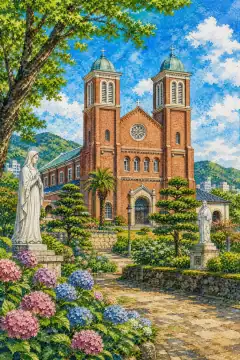
Urakami Cathedral
浦上天主堂
An Illustrated Japan
Culture & Tradition
Crafts, festivals, temples and the traditions still practised today.
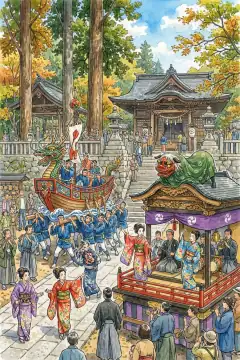
Nagasaki Kunchi
長崎くんち
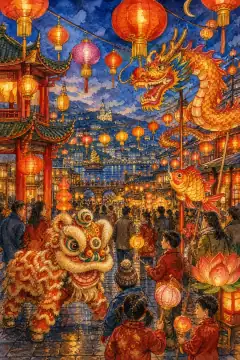
Nagasaki Lantern Festival
長崎ランタンフェスティバル
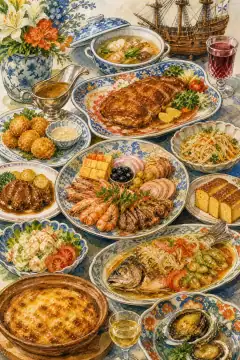
Shippoku cuisine
卓袱料理

Castella
カステラ
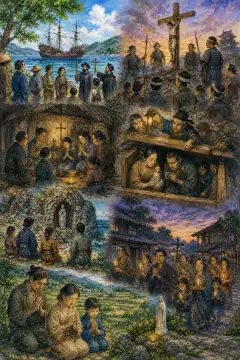
History of the Hidden Christians (Kakure Kirishitan)
隠れキリシタンの歴史

Hasami ware
波佐見焼
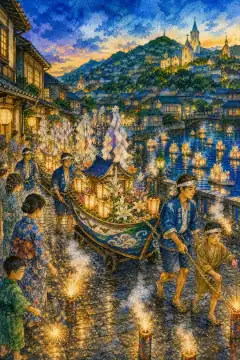
Shōrō-nagashi (Spirit Boat Procession)
精霊流し
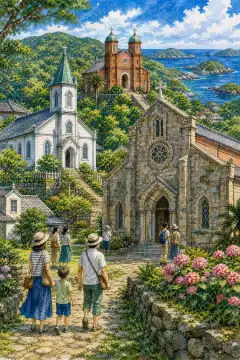
Churches of the Goto Islands
五島列島の教会群
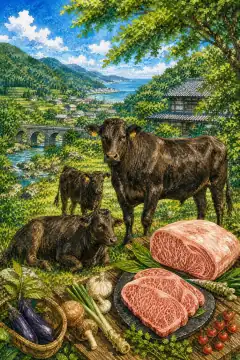
Nagasaki Wagyu
長崎和牛

Tortoiseshell Crafts
べっ甲細工
An Illustrated Japan
Life & Daily
Food, bathhouses, morning routines — what an ordinary day tastes like.
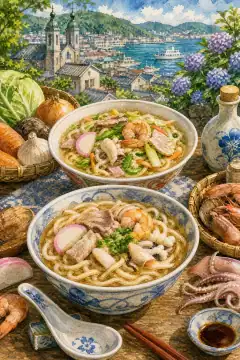
Champon and Sara Udon
ちゃんぽん・皿うどん

Food Stroll in Shinchi Chinatown
新地中華街での食べ歩き
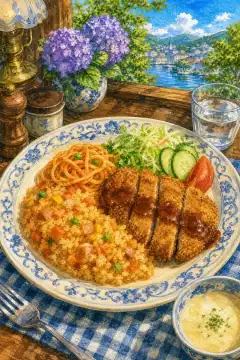
Toruko Rice (Turkish Rice)
トルコライス
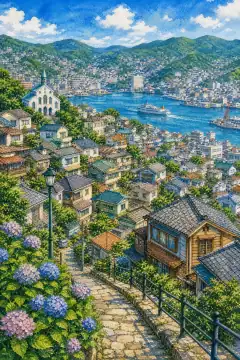
Everyday Scenes of a Hillside Town
坂の街の日常風景
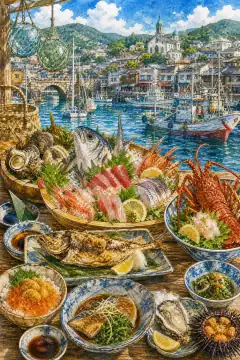
Seafood Delicacies
海鮮グルメ
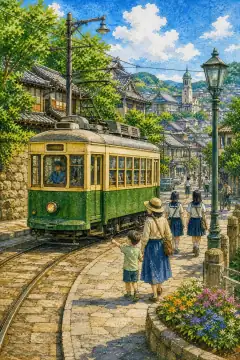
Nagasaki Streetcar (Nagasaki Electric Tramway)
路面電車(長崎電気軌道)
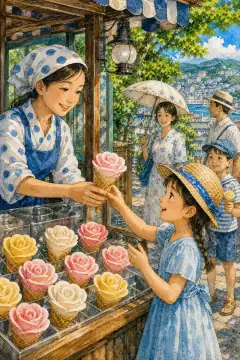
Chirin-Chirin Ice
チリンチリンアイス
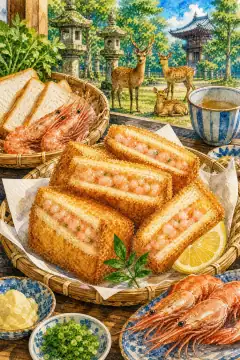
Hatoshi
ハトシ
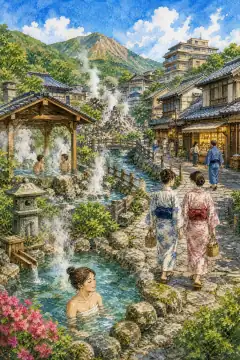
Hot-spring Hopping in Onsen Towns
温泉街での湯めぐり
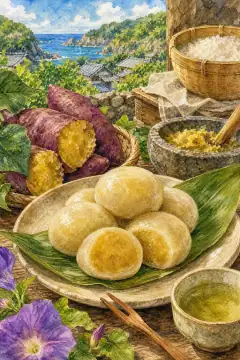
Kankoro-mochi
かんころ餅
About Nagasaki
Nagasaki Prefecture covers 4,131.22 square kilometers, population about 1.22 million, capital Nagasaki City. Surrounded by sea except for its Saga border, it includes Tsushima, Iki, and the Goto Islands. A 2023 Geographical Survey Institute count lists 1,479 islands, the national record, giving a convoluted rias coastline of 4,137 km, 12 percent of Japan's total, dotted with 83 ports. No point in the prefecture is more than 15 km from the coast. Low mountains dominate, with Unzen-Fugen-dake at 1,359 meters and Heisei-Shinzan at 1,483 meters active volcanoes whose 1990-1995 eruption caused major damage. Historically the area was western Hizen, Tsushima Province and Iki Province. The modern prefecture was created on November 14, 1871 from Nagasaki Prefecture of the former Nagasaki bugyo, absorbing Shimabara, Omura, Fukue and others after Haihan-chiken, excluding hamlet villages later merged in Heisei mergers from 79 municipalities to 21 today. Climate is warmed by the Tsushima Current, mild with small annual range, but continental cold waves can bring sharp cold and even midwinter days below zero, while winter clouds and shigure rain affect the East China Sea side with occasional heavy snow when monsoon wind passes unblocked over sea. Summer is humid, typhoons frequently make first landfall in Nagasaki, including many record storms since 1945, with high humidity over 75 percent in July. Biogeographically it retains continental relict species like Tsushima wildcat and mudskipper. Industry was built on shipbuilding at Mitsubishi Heavy Industries Nagasaki Shipyard, producing vessels and power-plant turbines and cruise ships, plus aircraft parts and information industries growing recently, automotive parts in Sasebo. Agriculture yields mikan, biwa loquat where Nagasaki is Japan's top producer by value, and Wagyu; fisheries catch sea bream, squid, tilefish in spring and yellowtail and fugu in winter, with processing clusters at Nagasaki Fish Market second volume for trawling. Tourism centers on two UNESCO World Heritages: Sites of Japan's Meiji Industrial Revolution including Hashima Island Gunkanjima Battleship Island with abandoned apartment ruins symbolizing coal mining history, and Hidden Christian Sites in the Nagasaki and Amakusa Region including Oura Cathedral oldest church in Japan 1864 and Shitsu Village and Egami, plus Dejima Dutch trading post of 1636-1859 with reconstructed warehouses, Glover Garden with foreign merchant houses, Nagasaki's night view certified among the world's top three with Hong Kong and Monaco from Mt. Inasa 333 meters altitude, Huis Ten Bosch Dutch theme park in Sasebo with seasonal illuminations, Shimabara Onsen, Unzen Onsen with sulfur-scented hot fields and Obama Onsen longest footbath in Japan 105 meters, and the scenic Kujukushima Islands 208 islands from a cruise and Goto church pilgrimage routes of church architecture unique to Japan and migratory bird reserves.