Mizuky Workshop / An Illustrated Japan / Chubu / Ishikawa
Ishikawa
40 illustrations · 石川県 · 石川县 · 石川縣
Ishikawa Prefecture lies on the Sea of Japan side of central Honshu in the Hokuriku part of Chubu, with about 1.08 million people and its capital Kanazawa. Blending Kaga's feudal castle-town elegance preserved from samurai times with Noto's rugged coastal farming and fishing culture, it is renowned worldwide for Kenrokuen Garden counted among Japan's Three Great Gardens, Kutani porcelain, Wajima lacquerware, and beautifully preserved geisha and samurai districts that attract culture lovers. This prefecture balances nature, history, and modern industry with broad appeal for residents and visitors seeking food specialties, scenic landscapes, and well-preserved cultural heritage.
An Illustrated Japan

Famous Views
The sights a prefecture is known for — the ones on the postcards, and a few that should be.
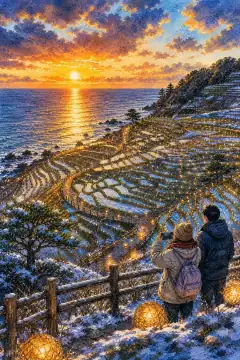
Hakumai Senmaida
白米千枚田
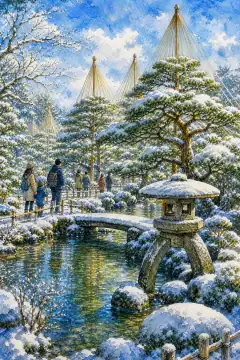
Kenrokuen Garden
兼六園

Chirihama Nagisa Driveway
千里浜なぎさドライブウェイ
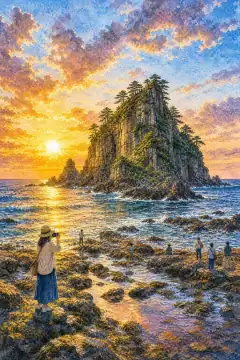
Mitsukejima
見附島
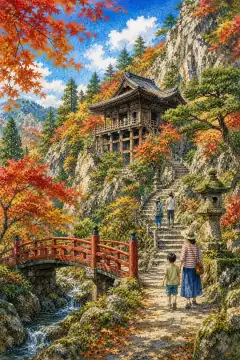
Natadera Temple
那谷寺
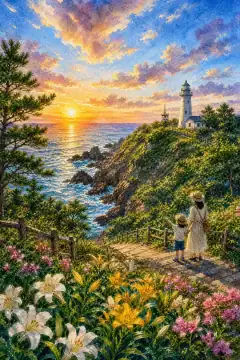
Rokko-zaki
禄剛崎
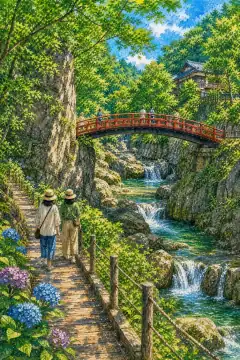
Kakusenkei Gorge
鶴仙渓
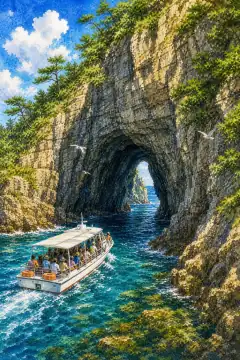
Ganmon
巌門
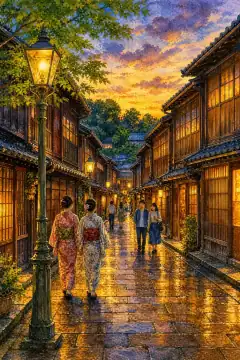
Higashi Chaya District
ひがし茶屋街
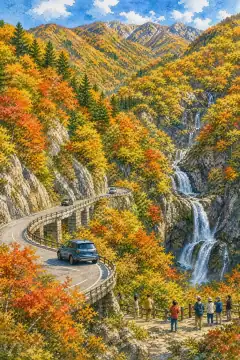
Hakusan Shirakawa-go White Road
白山白川郷ホワイトロード
An Illustrated Japan
Townscape & Scenery
Streets, harbours, hillsides: the places that give a prefecture its face.
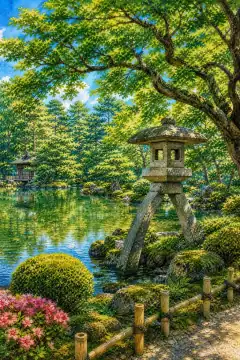
Kenroku-en Garden
兼六園
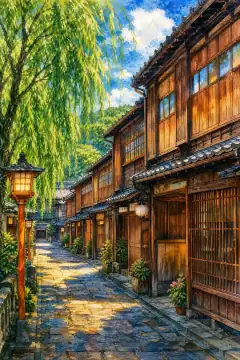
Higashi Chaya District
ひがし茶屋街
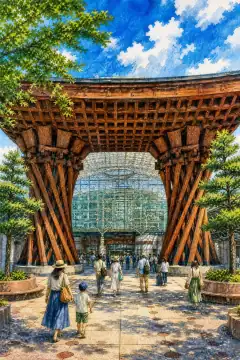
Kanazawa Station (Tsuzumi Gate)
金沢駅(鼓門)
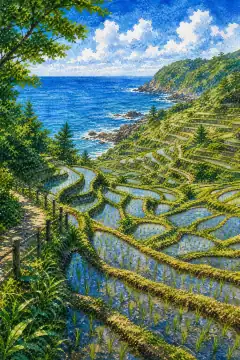
Shiroyone Senmaida Rice Terraces
白米千枚田
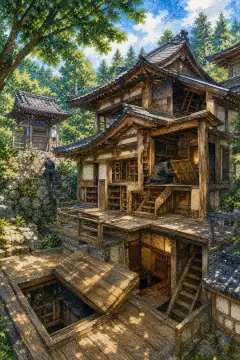
Ninja Temple (Myoryu-ji)
忍者寺(妙立寺)
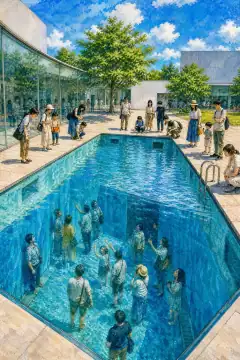
21st Century Museum of Contemporary Art, Kanazawa
金沢21世紀美術館
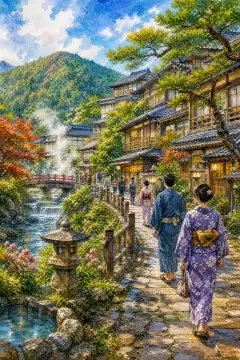
Kaga Onsen Villages
加賀温泉郷
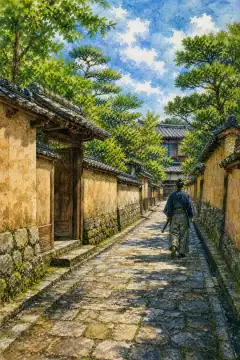
Nagamachi Samurai District
長町武家屋敷跡
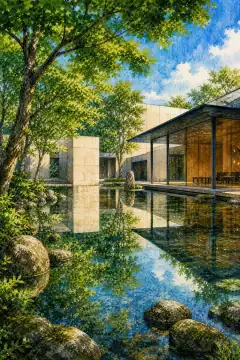
D. T. Suzuki Museum
鈴木大拙館

Chirihama Nagisa Driveway
千里浜なぎさドライブウェイ
An Illustrated Japan
Culture & Tradition
Crafts, festivals, temples and the traditions still practised today.
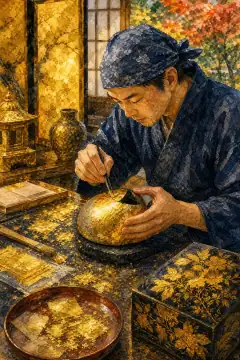
Kanazawa Gold Leaf (Gold leaf)
金沢箔(金箔)
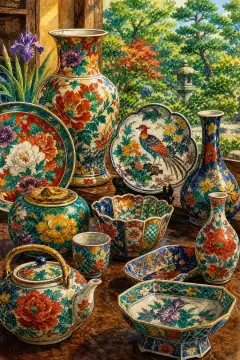
Kutani ware (Kutani-yaki)
九谷焼

Wajima lacquerware
輪島塗
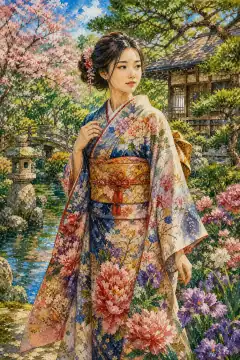
Kaga Yuzen
加賀友禅
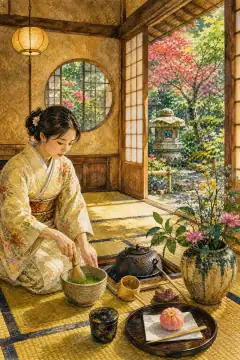
Tea Ceremony Culture (Chanoyu)
茶の湯文化
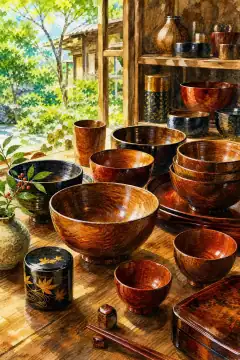
Yamanaka lacquerware
山中漆器
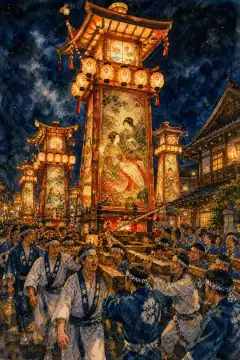
Noto Kiriko Festivals
能登のキリコ祭り

Kaga Mizuhiki
加賀水引
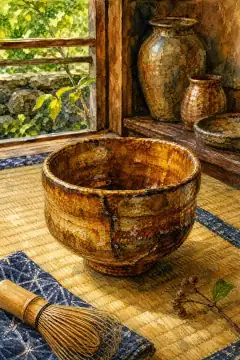
Ohi-yaki (Ohi Ware)
大樋焼

Gojinjo Daiko
御陣乗太鼓
An Illustrated Japan
Life & Daily
Food, bathhouses, morning routines — what an ordinary day tastes like.
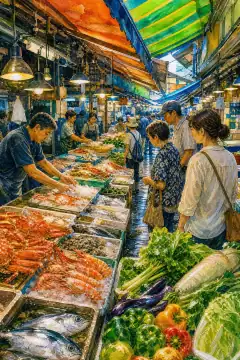
Omicho Market
近江町市場
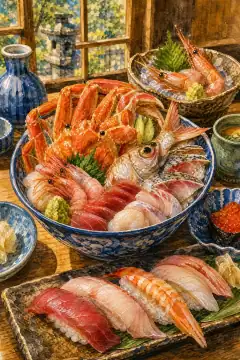
Fresh Seafood (Seafood Bowls & Sushi)
新鮮な魚介類(海鮮丼・寿司)
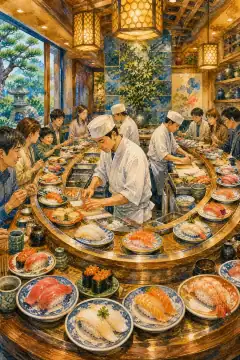
Conveyor-belt sushi (kaiten-zushi)
回転寿司
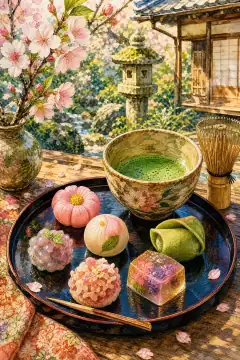
Wagashi (Traditional Japanese Confectionery)
和菓子文化
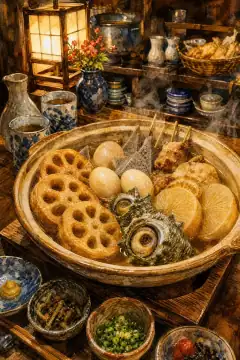
Kanazawa Oden
金沢おでん
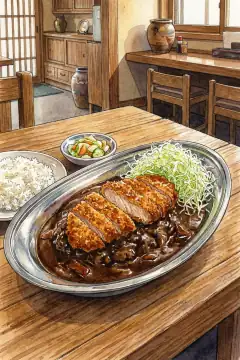
Kanazawa Curry
金沢カレー
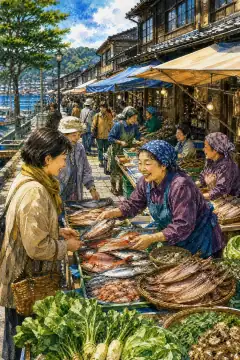
Wajima Morning Market
輪島朝市
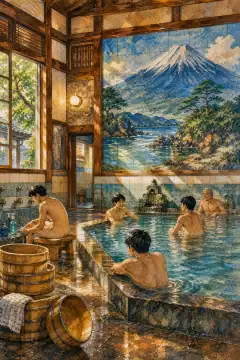
Sento (Public Bathhouses)
銭湯文化
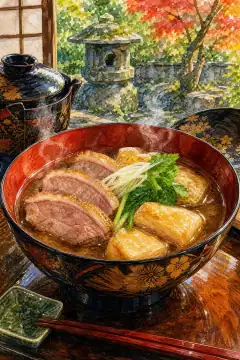
Jibuni
治部煮(じぶに)

Gold Leaf Soft-Serve
金箔ソフトクリーム
About Ishikawa
Ishikawa Prefecture covers about 4,190.94 sq km and has roughly 1.08 million residents (about 1.09 million in 2024 estimates), governed from Kanazawa City which holds about 460,000 people. It occupies central Honshu facing the Sea of Japan, bordering Toyama to the east, Fukui to the southwest, and Gifu to the southeast, with 581 km of coastline. The south features the Kaga Plain and the Ryohaku Mountains crowned by Mt. Haku at 2,702 m, one of Japan's Three Holy Mountains with alpine plants, while the north is the hilly Noto Peninsula with Chirihama sand beach where cars can drive and Senmaida rice terraces. Historically, the area corresponded to Kaga and Noto provinces, Kanazawa thrived as a 1,000,000 koku Maeda clan castle town with crafts. After the 1871 Haihan-chiken abolition of domains, Kanazawa Prefecture was renamed Ishikawa in 1872 after Ishikawa County where the office briefly moved; present borders fixed in 1883 after separating Toyama and Fukui. Climate is Sea of Japan type with wet, snowy winters, frequent winter thunder called Buri-okoshi signaling yellowtail catch, heavy snow in mountains designated heavy-snow zone, summers humid and hot with foehn. Industry centers on machinery, textiles, Komatsu construction machinery, electronics in Hokuriku Industrial Region, plus high-value crafts such as Kutani ware, Wajima lacquerware, Yamanaka lacquer, Kaga Yuzen dyeing, gold leaf supplying 99 percent of domestic output. Agriculture produces Kaga vegetables and sake rice. Tourism highlights include Kenrokuen Garden, Kanazawa Castle Park, the 21st Century Museum of Contemporary Art, Higashi Chaya tea district and Myoryuji Ninja Temple, Wajima Morning Market, Chirihama Beach, Shiroyone Senmaida, Noto Kongo cliffs, Wajima Kiriko Festival, Kaga Onsen villages Yamashiro, Yamanaka, Katayamazu with seasonal baths, and Mt. Haku National Park. Hokuriku Shinkansen connects Kanazawa to Tokyo in 2.5 hours, boosting visitors. Tourism and industry coexist with deep cultural traditions preserved for centuries offering visitors nature, history, and cuisine year-round. Visitors often combine cultural touring with cuisine tasting, sampling Jibuni duck stew, fresh Nodoguro, and sake from over 20 breweries using Haku mountain water. Seasonal festivals such as Hyakumangoku Matsuri reenact Maeda lord processions, while Kanazawa's geisha continue performances in Ochaya houses. The coast road offers cycling, and Noto Airport provides regional connections, making multi-day itineraries easy. Combined attractions make it suitable for first-time and repeat visitors year-round with efficient public transport and well-signed hiking routes. Cultural preservation efforts maintain historic streets and traditional workshops open to visitors for hands-on lessons.