Mizuky Workshop / An Illustrated Japan / Shikoku / Kagawa
Kagawa
40 illustrations · 香川県 · 香川县 · 香川縣
Kagawa, Japan's smallest prefecture at 1,876.83 square kilometers with roughly 900,983 people and capital Takamatsu, markets itself as the Udon Prefecture for its dense concentration of more than six hundred noodle shops. Fringed by the Seto Inland Sea with over one hundred ten islands including Shodoshima and Naoshima, backed by the gentle Sanuki Mountains, the prefecture pairs historic pilgrimage routes to Kotohiragu with Ritsurin Garden strolling ponds and the contemporary art islands of the Setouchi Triennale. With the nation's lowest rainfall, highest sunny-day rate and the most reservoirs, it is exceptionally compact yet culturally rich for island hopping and food tours alike.
An Illustrated Japan

Famous Views
The sights a prefecture is known for — the ones on the postcards, and a few that should be.
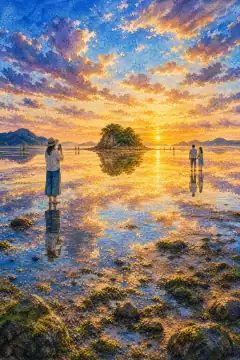
Fubo-ga-hama
父母ヶ浜
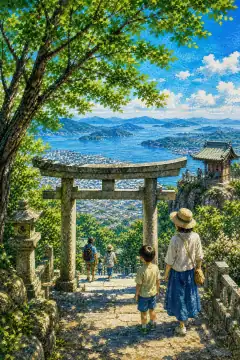
Takaya Jinja – Tenkū no Torii
高屋神社「天空の鳥居」
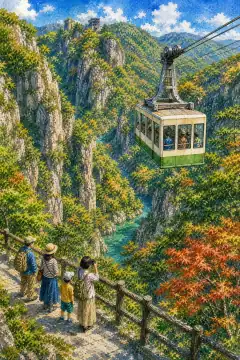
Kankakei Gorge
寒霞渓
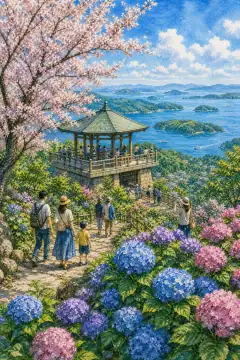
Shiunzan
紫雲出山
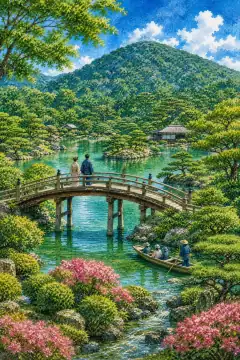
Ritsurin Garden
栗林公園
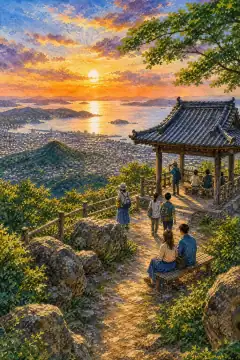
Yashima
屋島
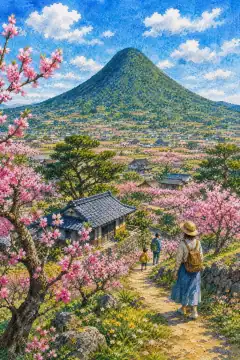
Inoyama – Sanuki-Fuji
飯野山(讃岐富士)
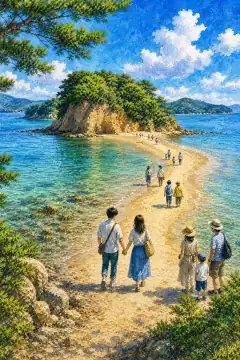
Angel Road
エンジェルロード
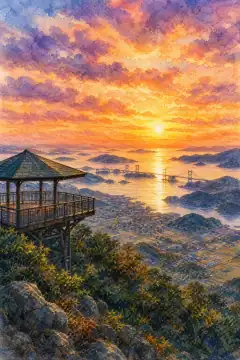
Aonoyama Summit Observatory
青ノ山山頂展望台
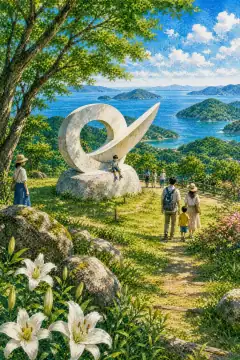
Aji Ryuo-yama Park
あじ竜王山公園
An Illustrated Japan
Townscape & Scenery
Streets, harbours, hillsides: the places that give a prefecture its face.
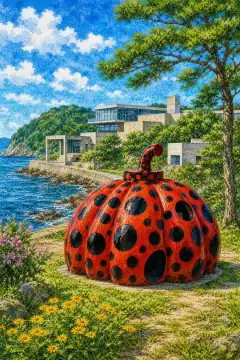
Naoshima (Art Island)
直島(アートの島)
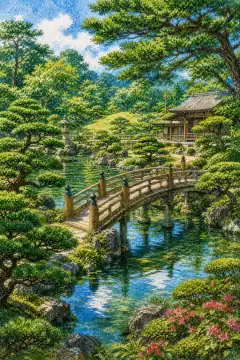
Ritsurin Garden
栗林公園
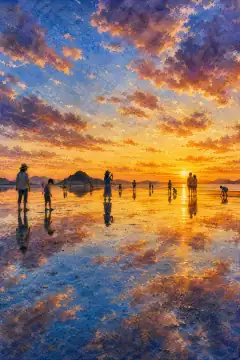
Chichibugahama Beach
父母ヶ浜(ちちぶがはま)
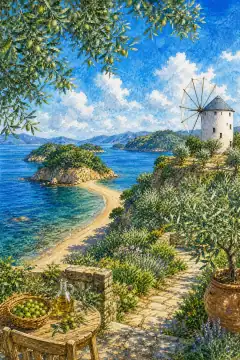
Shodoshima (Angel Road)
小豆島(エンジェルロード)
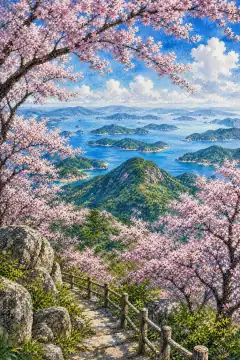
Mount Shiude
紫雲出山(しうでやま)
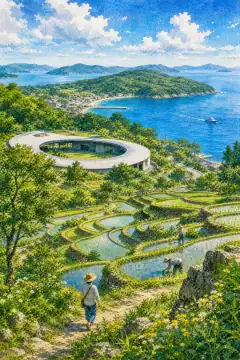
Teshima
豊島(てしま)
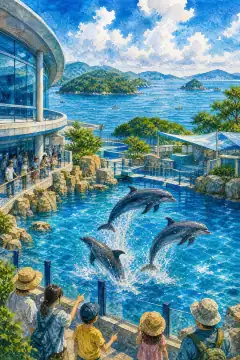
Shikoku Aquarium
四国水族館
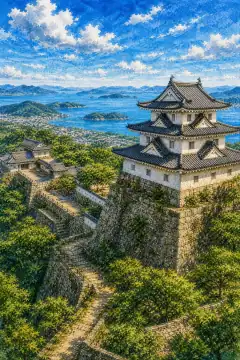
Marugame Castle
丸亀城
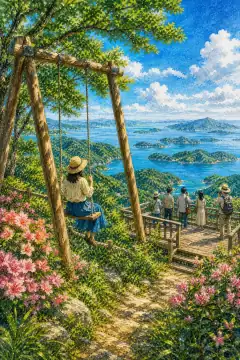
Unpenji Summit Park
雲辺寺山頂公園
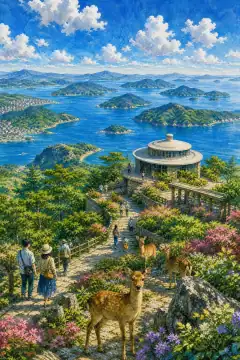
Yashima
屋島(やしま)
An Illustrated Japan
Culture & Tradition
Crafts, festivals, temples and the traditions still practised today.
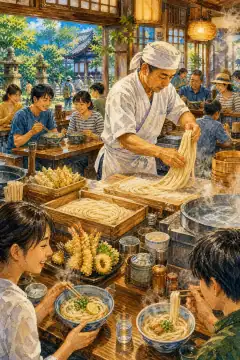
Sanuki Udon Culture
讃岐うどん文化
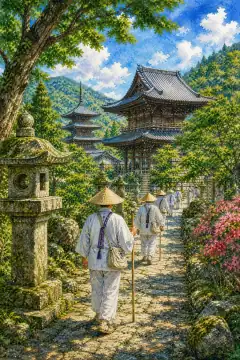
Shikoku 88-Temple Pilgrimage (Ohenro)
四国八十八ヶ所霊場(お遍路)
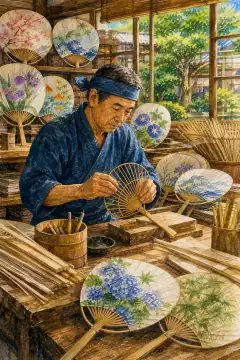
Marugame Uchiwa
丸亀うちわ
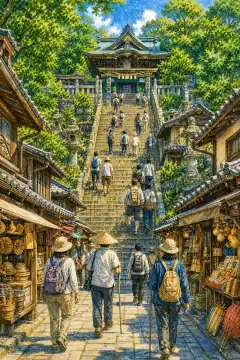
Kotohira Shrine (Konpira-san)
金刀比羅宮(こんぴらさん)の参拝文化
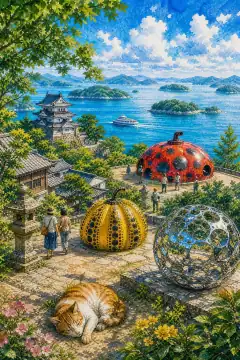
Setouchi Triennale (Setouchi International Art Festival)
瀬戸内国際芸術祭
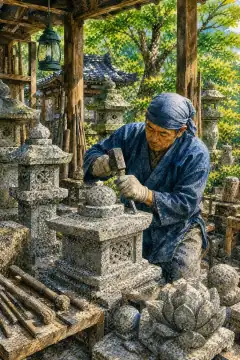
Aji Stone Craftsmanship
庵治石(あじいし)の石材工芸
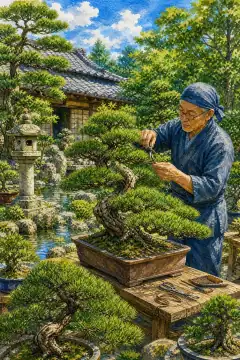
Takamatsu Bonsai Culture
盆栽文化(高松盆栽)
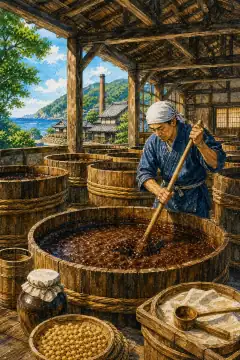
Traditional Soy Sauce Brewing
醤油造りの伝統
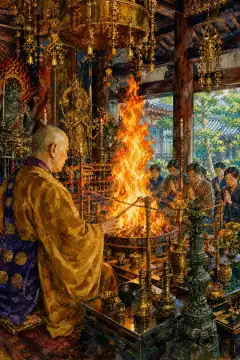
Goma Fire Ritual Experience
護摩行(ごまぎょう)体験
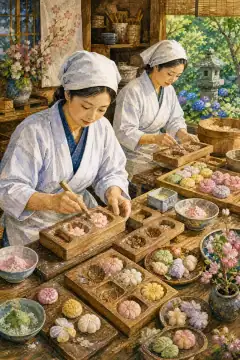
Wasanbon Making Workshop
和三盆(わさんぼん)作り
An Illustrated Japan
Life & Daily
Food, bathhouses, morning routines — what an ordinary day tastes like.
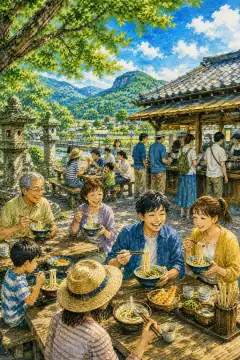
Udon Shop Hopping (Udon Tourism)
うどん店巡り(うどんツーリズム)
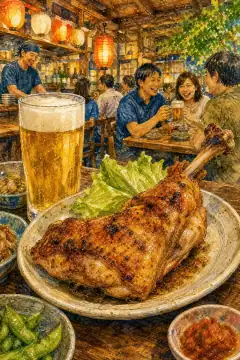
Honetsukidori (Bone-in Chicken)
骨付鳥
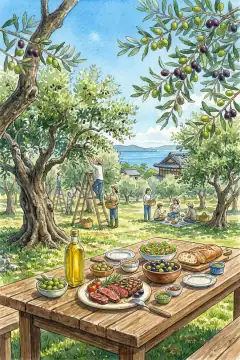
Olive Farming and Food Culture
オリーブ栽培と食文化
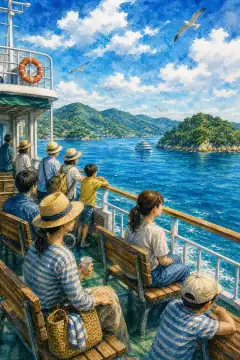
Island-hopping by ferry
島々のフェリー移動
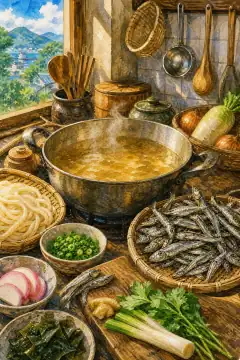
Iriko (Dried Sardine) Dashi Culture
いりこ(煮干し)出汁の文化
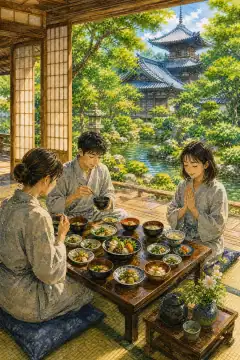
Stay at a shukubo (temple lodging)
宿坊(しゅくぼう)での宿泊体験
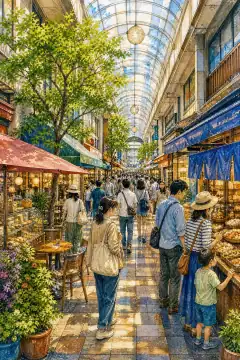
Takamatsu Chuo Shopping Arcade
商店街歩き(高松中央商店街)
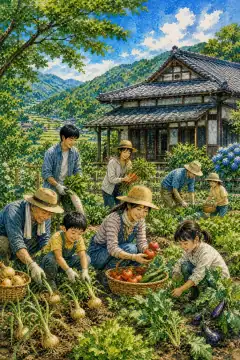
Farmstay Experience
農泊(ファームステイ)体験
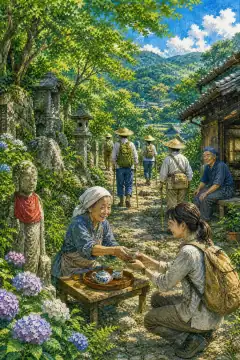
Hiking the Henro (Shikoku Pilgrimage) Trail
遍路道(へんろみち)のハイキング
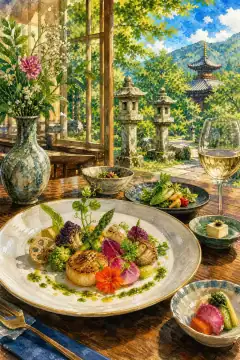
Shojin-French Fusion Cuisine
精進料理とフレンチの融合
About Kagawa
Kagawa Prefecture occupies northeastern Shikoku, measuring just 1,876.83 square kilometers, the smallest in Japan, with a population near 900,983 and its administrative heart in Takamatsu City. The Sanuki Mountains form a soft southern wall, while the north spreads into the Sanuki Plain facing the Seto Inland Sea, dotted with more than fourteen thousand irrigation ponds built to survive drought, earning the nickname Pond Prefecture, and more than one hundred ten islands ranging from fishing hamlets to art bastions.Formerly Sanuki Province, historically a key node for Seto Inland maritime trade and a major granary, it was ruled in early modern times by the Matsudaira clan in Takamatsu Domain and the Kyogoku clan in Marugame Domain whose original castle keep survives on prodigious stone walls. Modern prefectural identity was turbulent: first created in 1871 from Takamatsu and Marugame, dissolved into Myodo Prefecture months later, resurrected in 1873, merged into Ehime Prefecture in 1875, and finally regained independence in December 1888 after persistent local petitioning driven by cultural distinctness.The climate is quintessential Seto Inland Mediterranean with annual precipitation around one thousand millimeters, the lowest in Japan, and more than 270 sunny days, promoting double cropping of rice and wheat in winter and lettuce and garlic in warm shoulder seasons, but requiring meticulous water management. Water culture shaped urban life in Takamatsu where Mizuki Matsubara tidal flats and reservoirs are community landmarks. Industry is surprisingly specialized for its size: shipbuilding and boiler factories along the Bisan Strait, high-quality granite from Aji and sanukite lithophone stone used for ancient chimes, glove manufacturing commanding nearly ninety percent domestic share stemming from post-war needs, plus fermentative industries like soy sauce on Shodoshima where barrel-aged crafts continue and sugar, olive groves first successfully planted in Japan in 1908 providing oil and cosmetics. Yellowtail aquaculture was commercialized here first in 1928 and still pioneers full-cycle tuna farming.The tourism constellation is varied despite compactness: Kotohiragu Shrine, guardian of seafarers, reached via 785 granite steps passing souvenir shops and shrine gates, Ritsurin Garden, a former daimyo garden acclaimed as Special Place of Scenic Beauty with six ponds and thirteen hills meticulously borrowed from Mount Shiun's backdrop, arranged for seasonal tea ceremony walks, Naoshima's Benesse Art Site including Ando Tadao's Chichu Art Museum embedding Monet's Water Lilies underground, Teshima Art Museum's water droplet architecture, and Megijima's demon legends, plus Shodoshima Island where Kankakei Gorge offers one of Japan's three great gorges, olive parks, soy sauce factories and Angel Road, a sandbar appearing twice daily linking islets at low tide for lovers' wishes. Udon pilgrimage itself constitutes a route, with shops differentiated by noodle firmness, soup base of iriko dried sardines and self-serve tempura style that invites long tasting loops. Smallness becomes intensity in Kagawa, where every kilometer stacks history, flavor and contemporary creativity into easy reach.